

Automation is developed alongside the process.
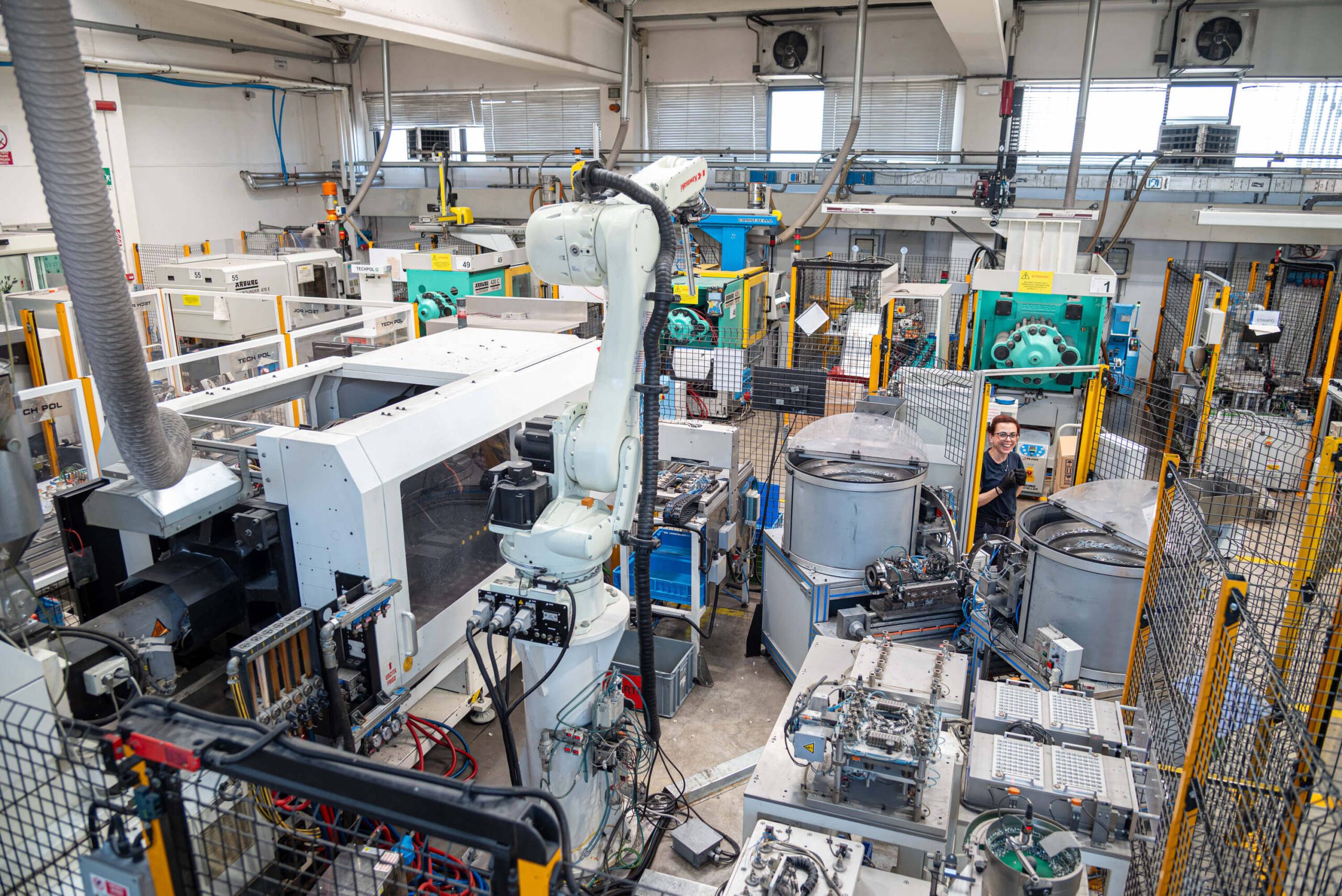
At Techpol, the development of robotic systems is integrated from the very beginning of the component design process. This parallel approach ensures stable, repeatable cycles, fully optimized for series production volumes.
In-house design and construction of automation systems
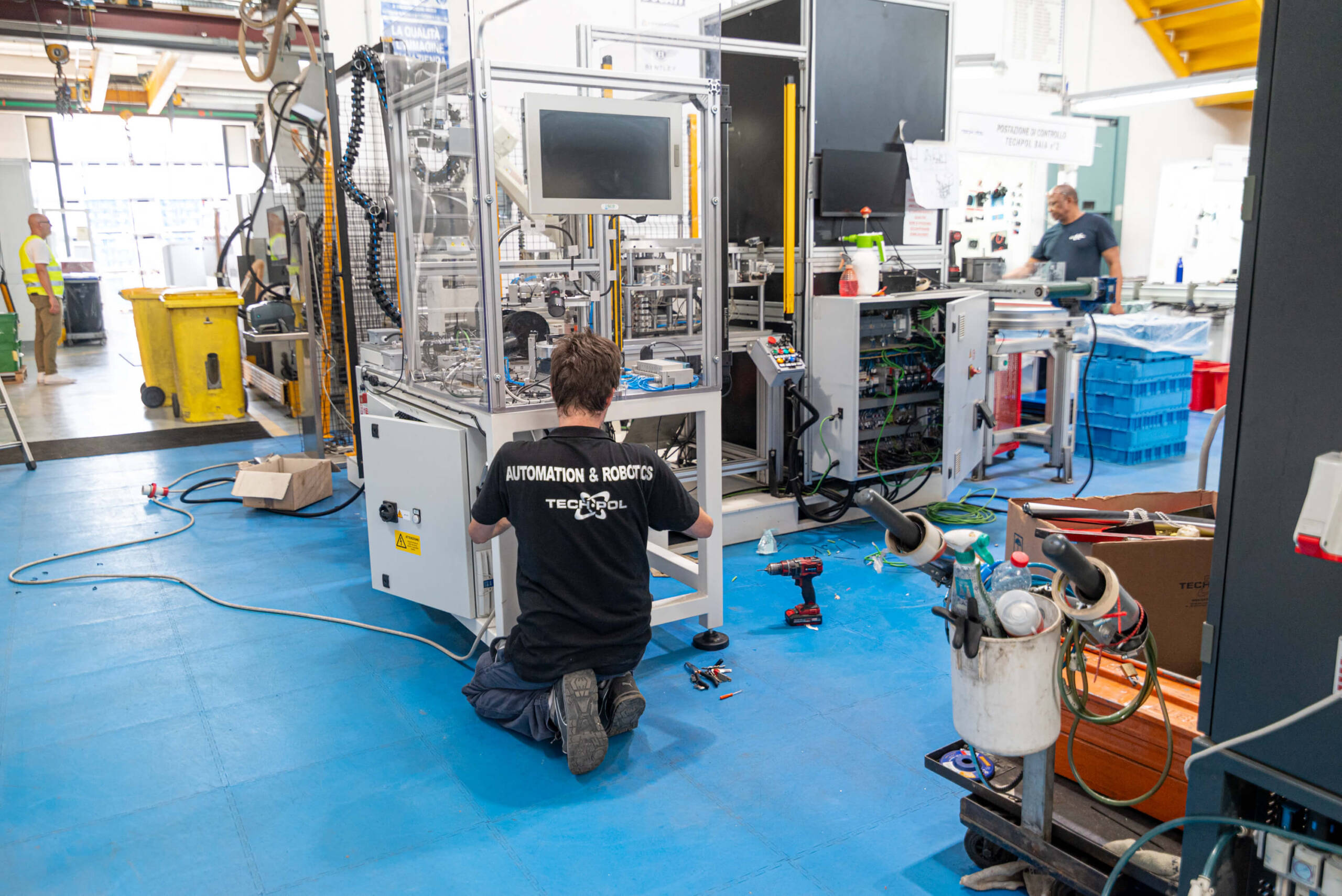
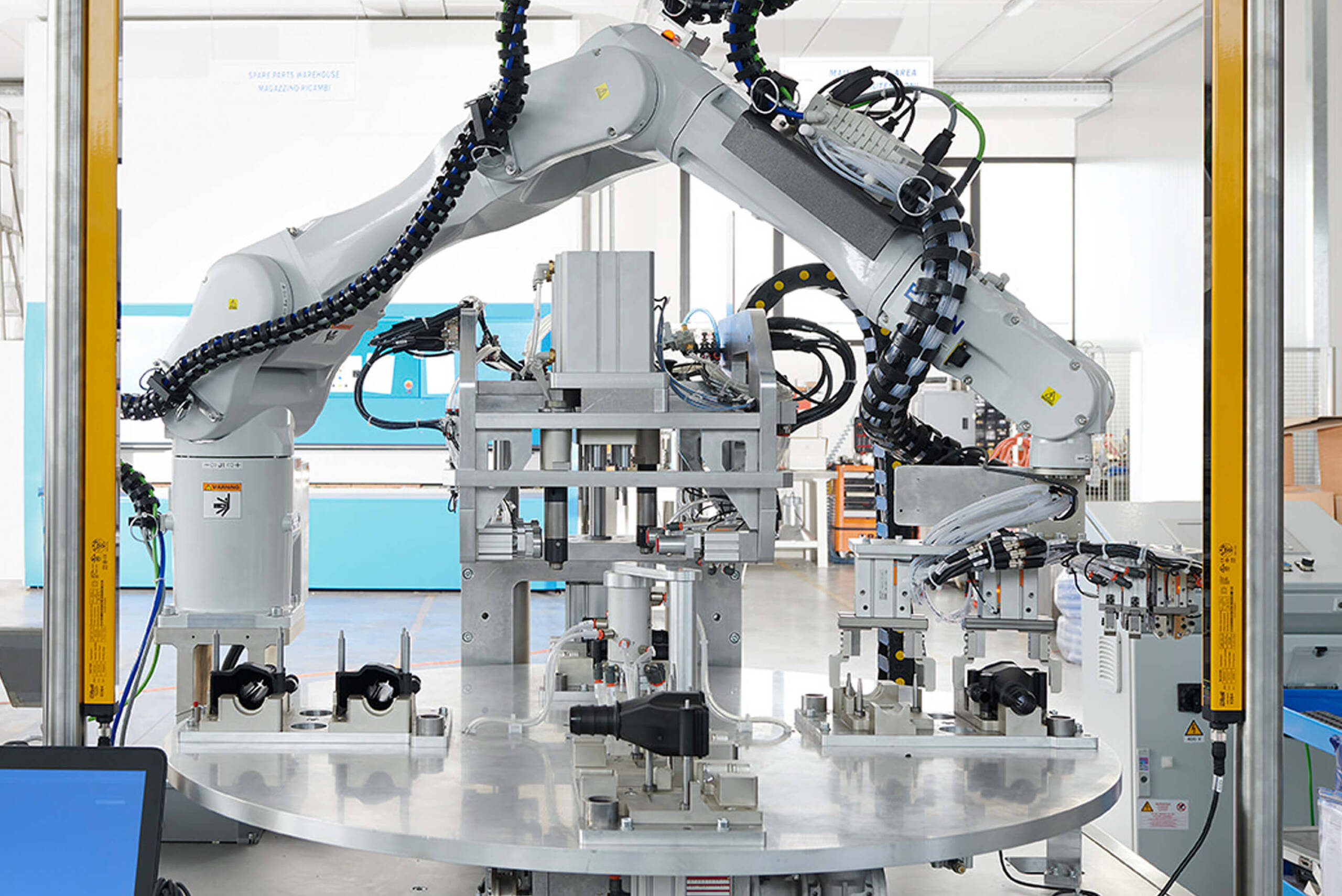
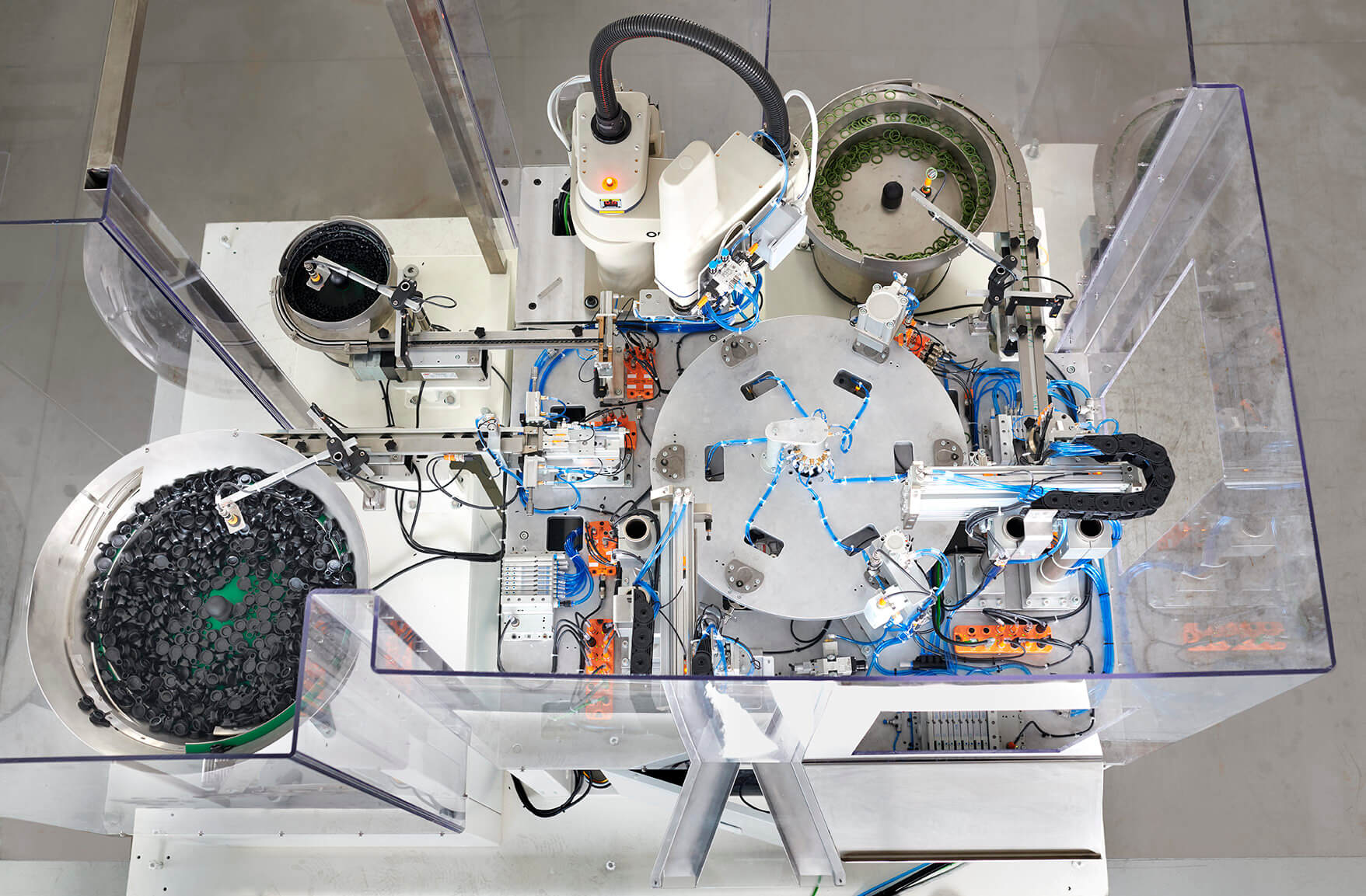
The design and construction of automation systems are carried out in-house. The technical department develops the solutions using design environments such as SolidWorks, Creo and Catia, simulating the robotic cells according to customer specifications and process requirements.
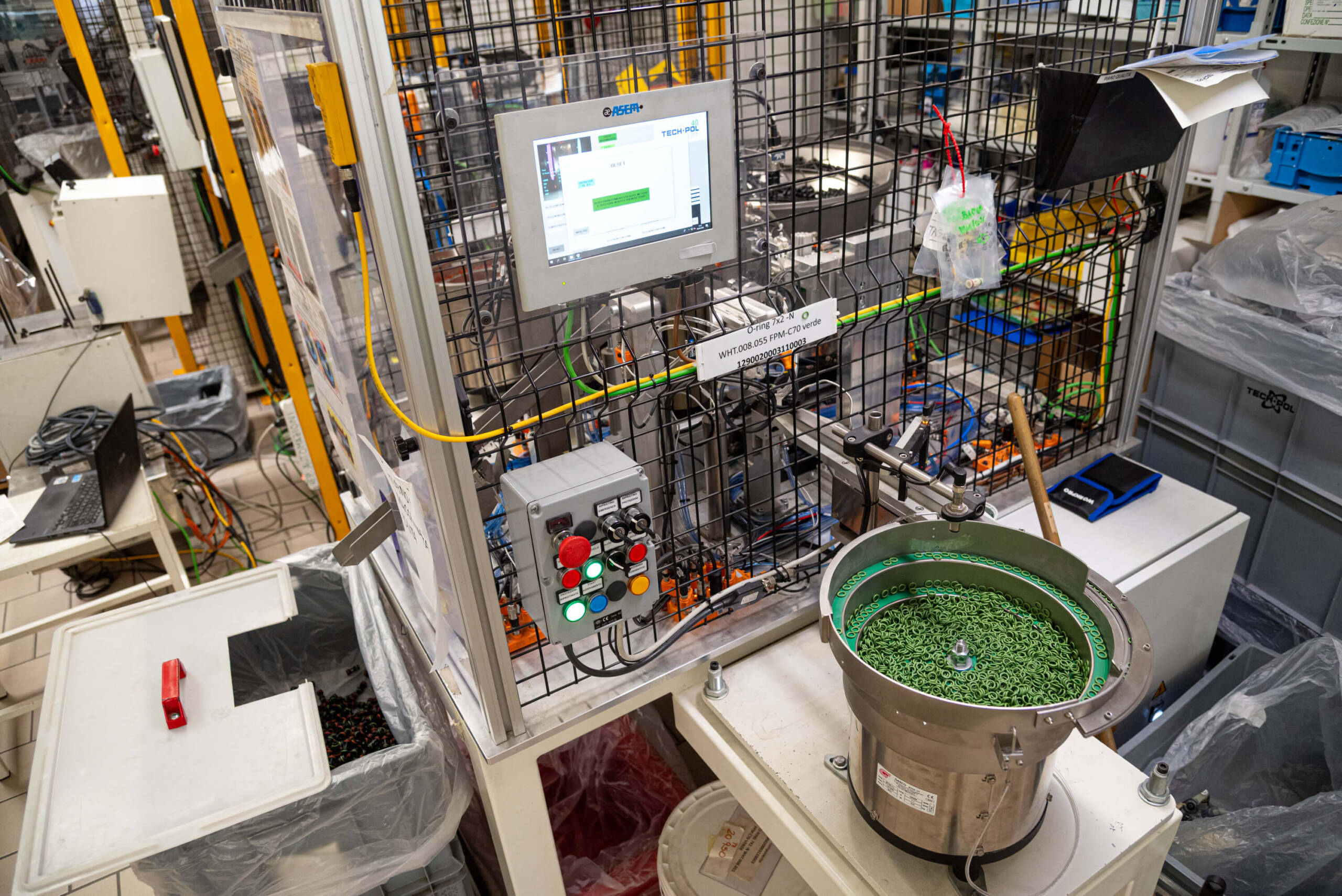
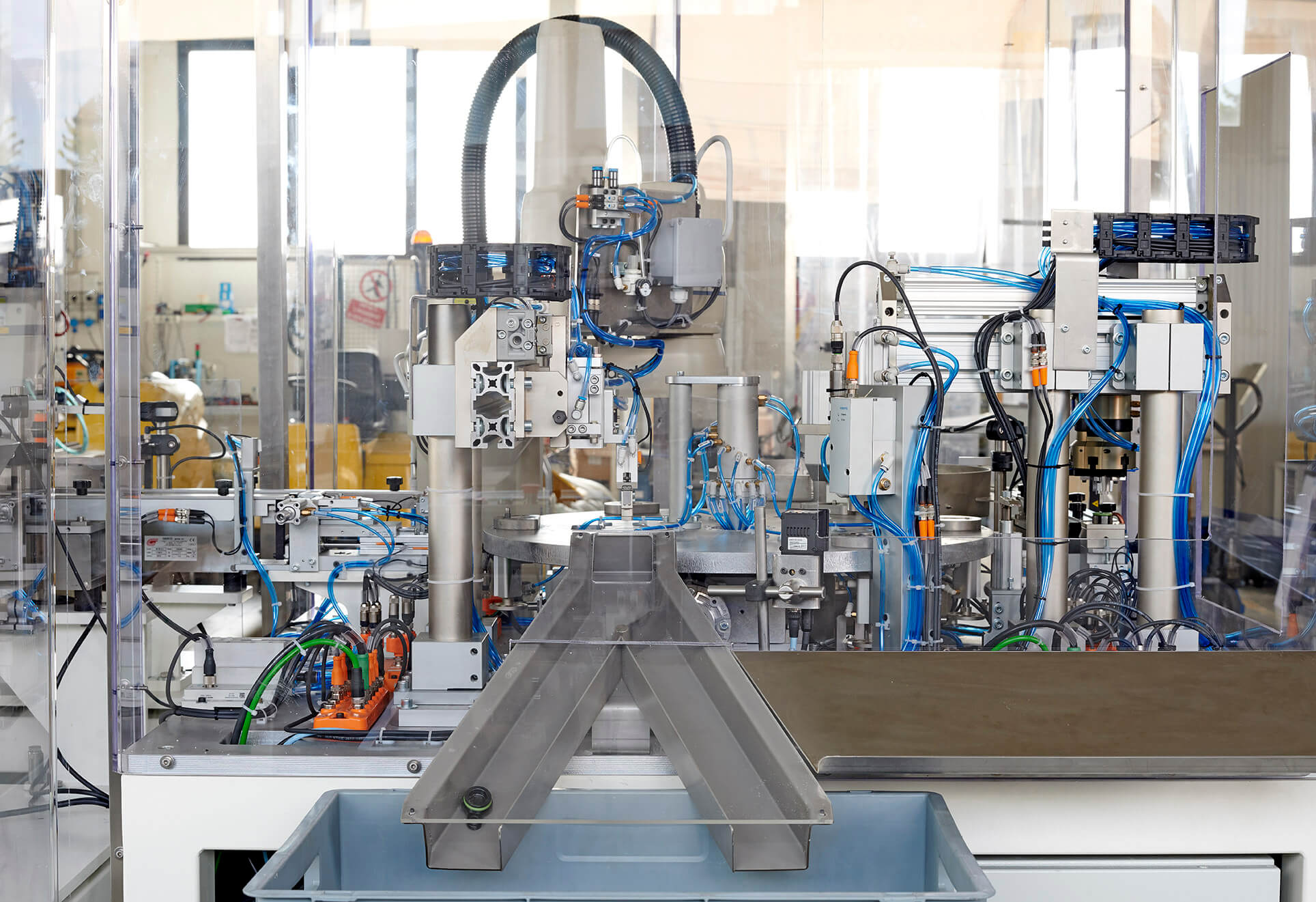
From frame fabrication to electrical and pneumatic wiring, through to the development of the control software, the entire system is built in-house. This allows molding, component handling and subsequent operations to be seamlessly integrated, reducing start-up times and reliance on external suppliers.
Robotics for complex and flexible operations
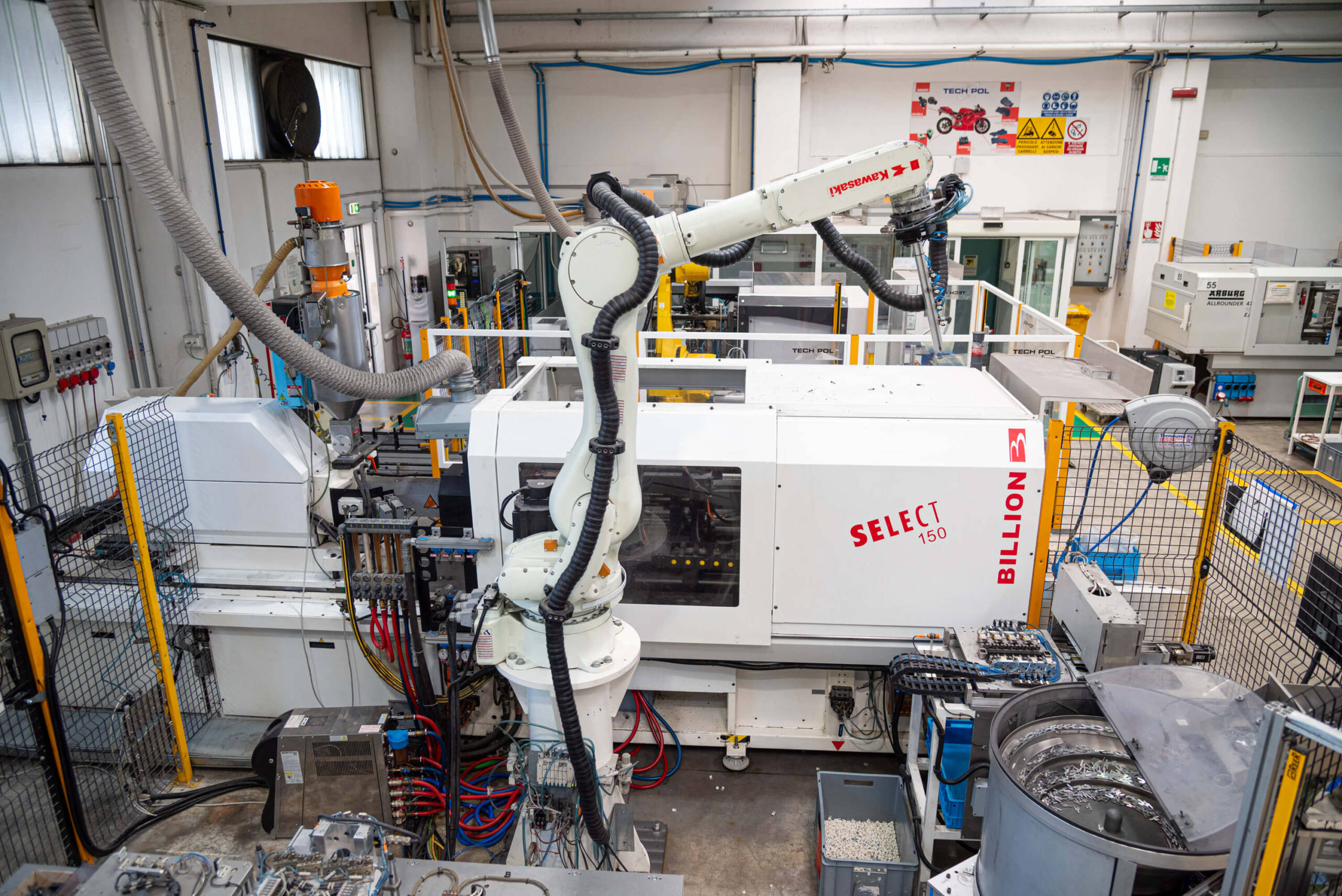
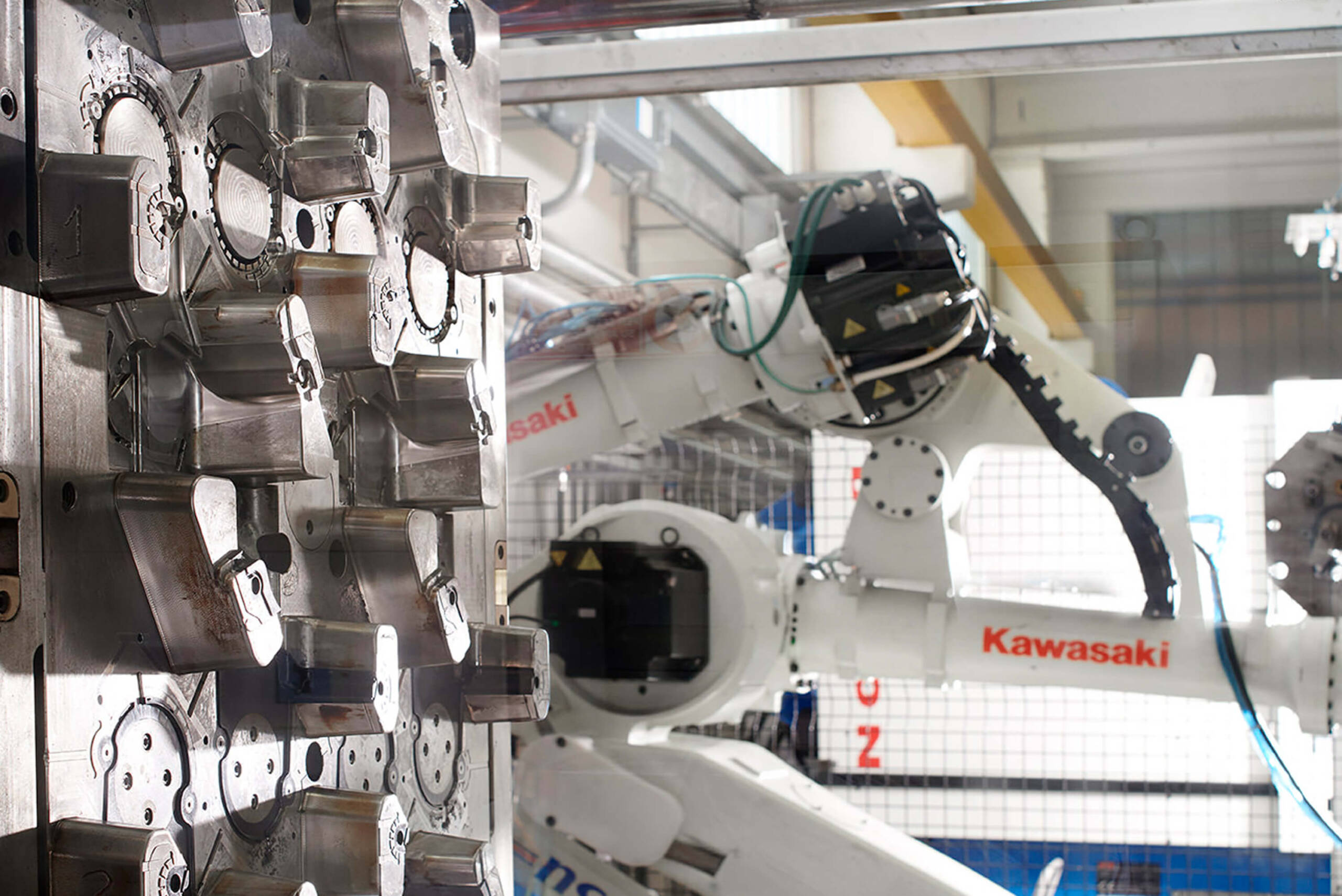
The robotic cells use articulated robots, SCARA and collaborative robots to handle complex operations such as loading metal inserts, post-molding assembly and the handling of delicate components. The stations are designed to adapt quickly to different products, ensuring flexibility even when switching production runs.
Robotics, Control Systems and Production Continuity
Techpol’s automation systems integrate handling, assembly, in-line inspection and logistical support to make the process more stable, flexible and continuous.
Machine Vision and In-Line Inspection
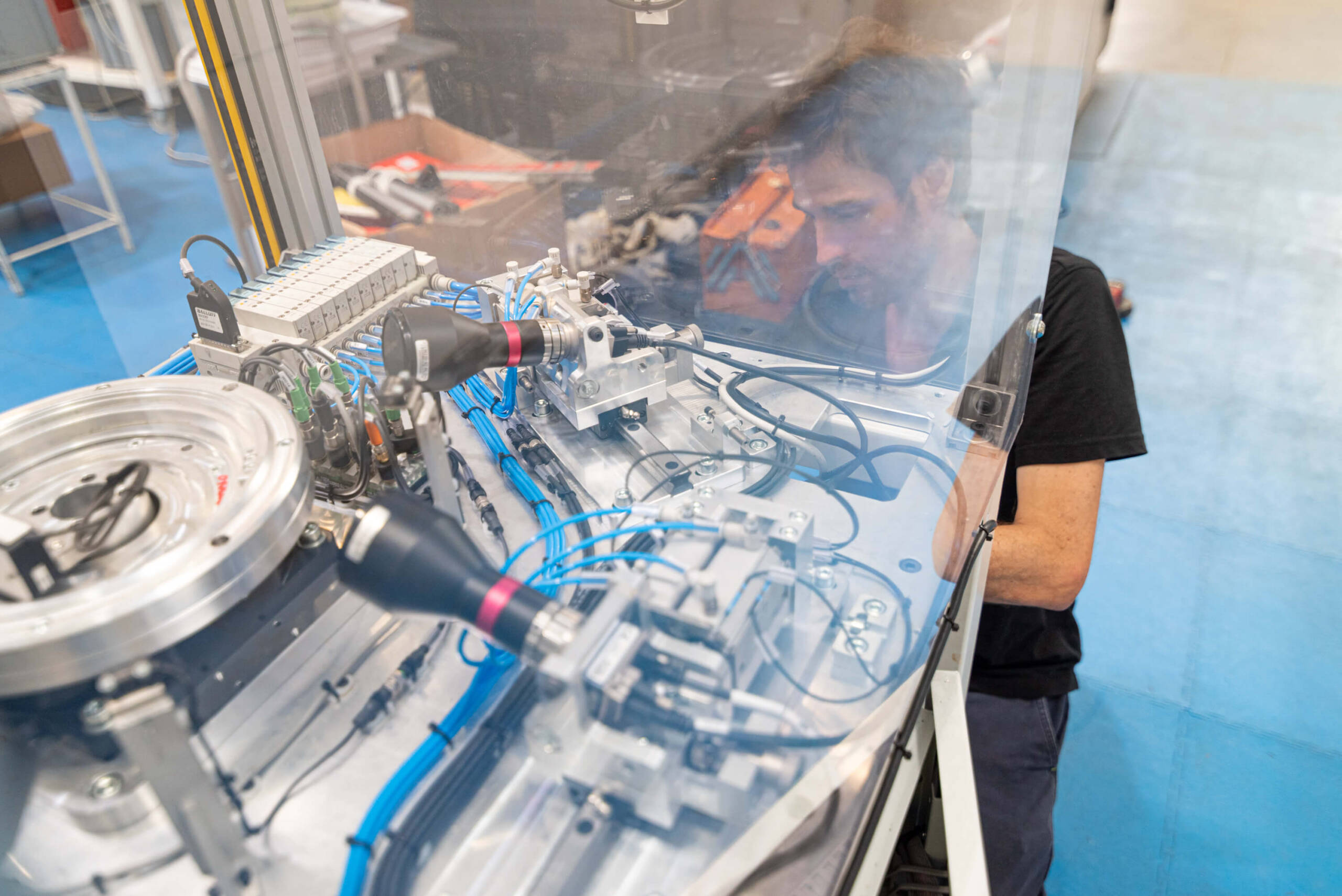
Automation also integrates machine vision systems and control sensors that monitor every production cycle. Part recognition, dimensional inspection and accessory presence checks are performed directly in-line, making it possible to immediately identify any non-conformities.
Robotics applied to welding and precision machining
Robotics is also used for value-added operations, such as ultrasonic welding or precision machining with spindles integrated into the cells. The in-house design of the workholding fixtures ensures precise fitting and consistent results over time.
Production continuity supported by automated logistics
To support the automated production lines, Modula vertical storage systems ensure the organized management of components and the immediate availability of spare parts, contributing to production continuity.
What does this mean for the customer
Automation designed alongside the production process
In-house development of robotic cells and control software
Integration of molding, assembly and in-line inspection
Greater process stability and reduced variability
Faster start-up times for series production