

The power of the presses, the precision of the process
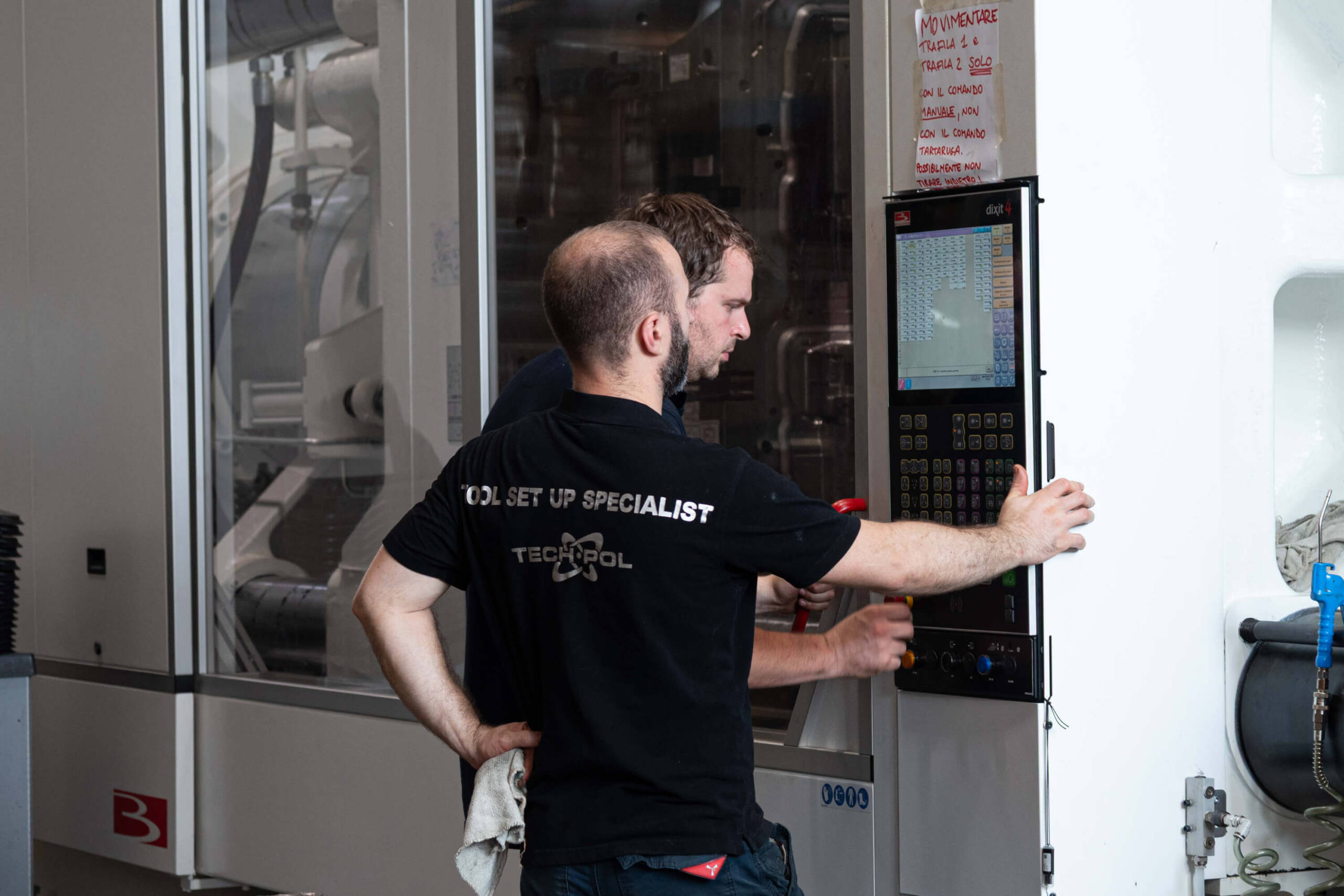
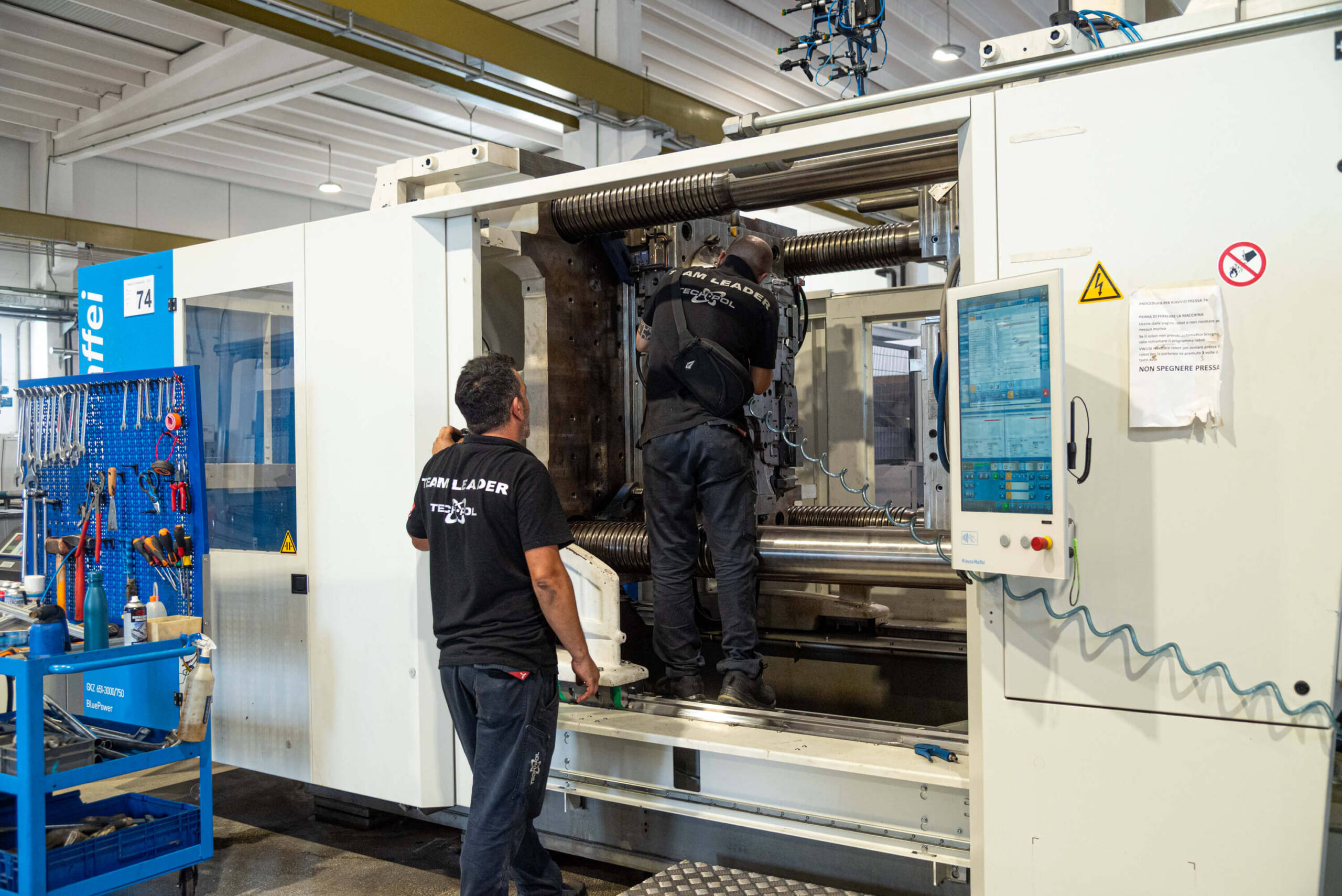
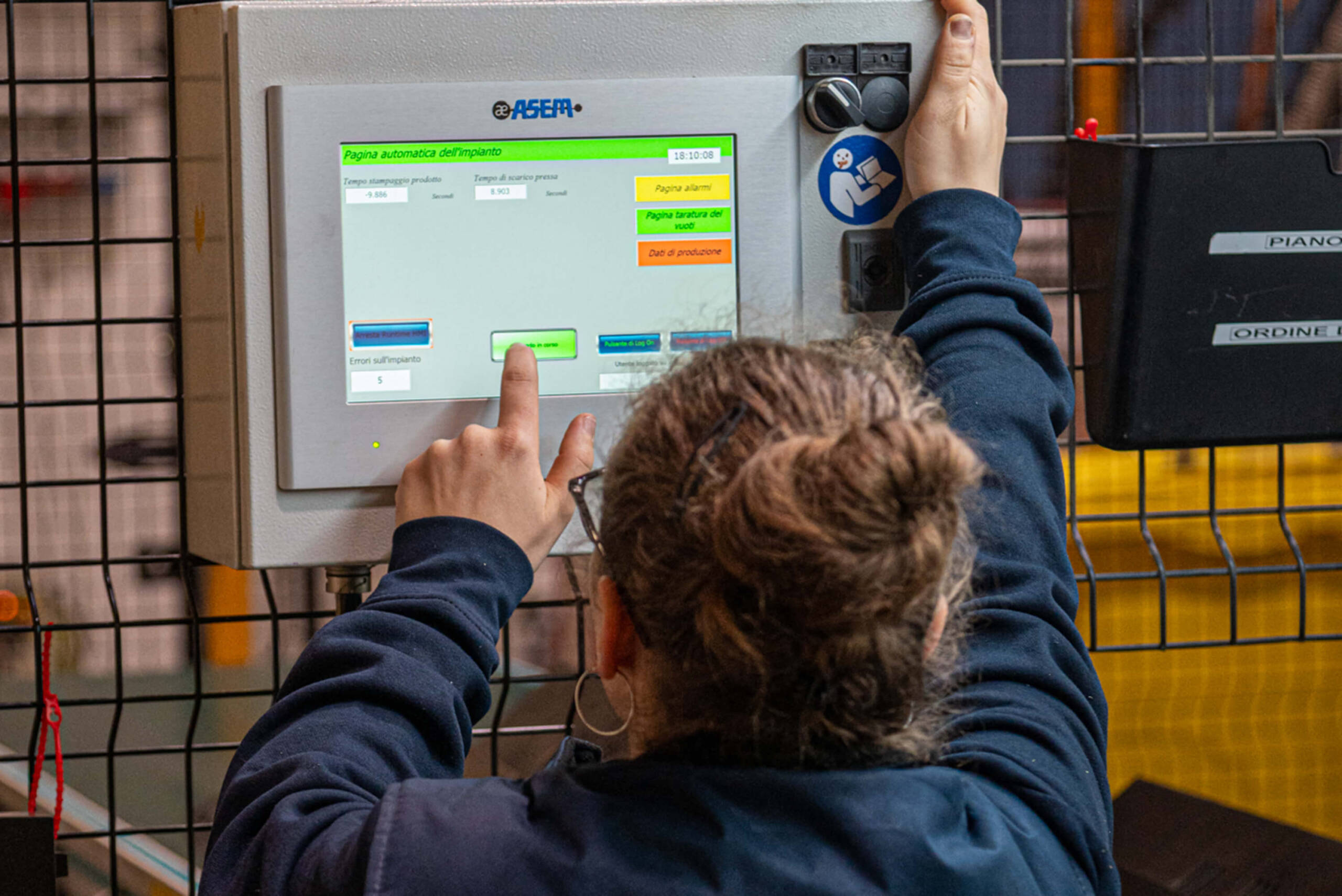
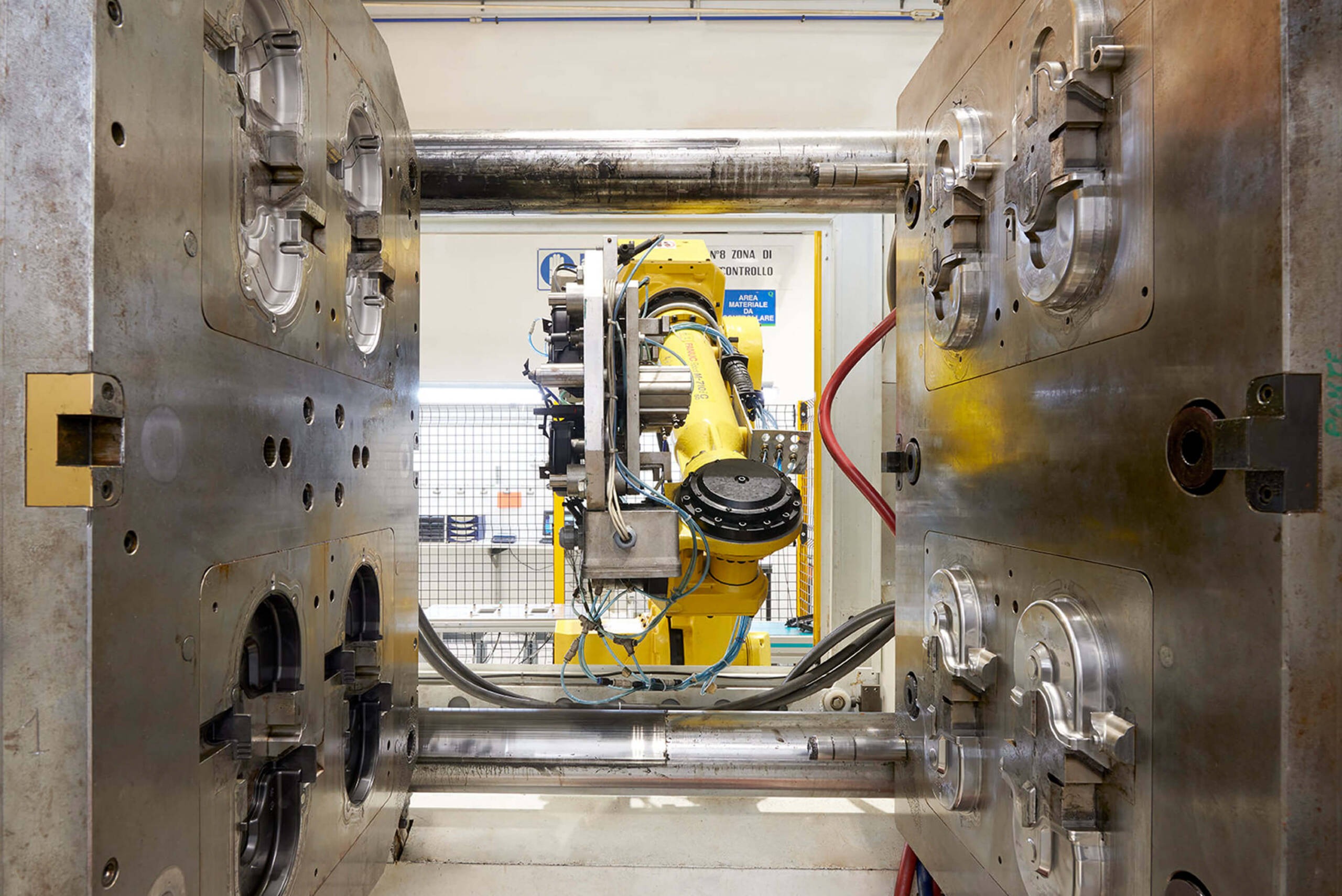
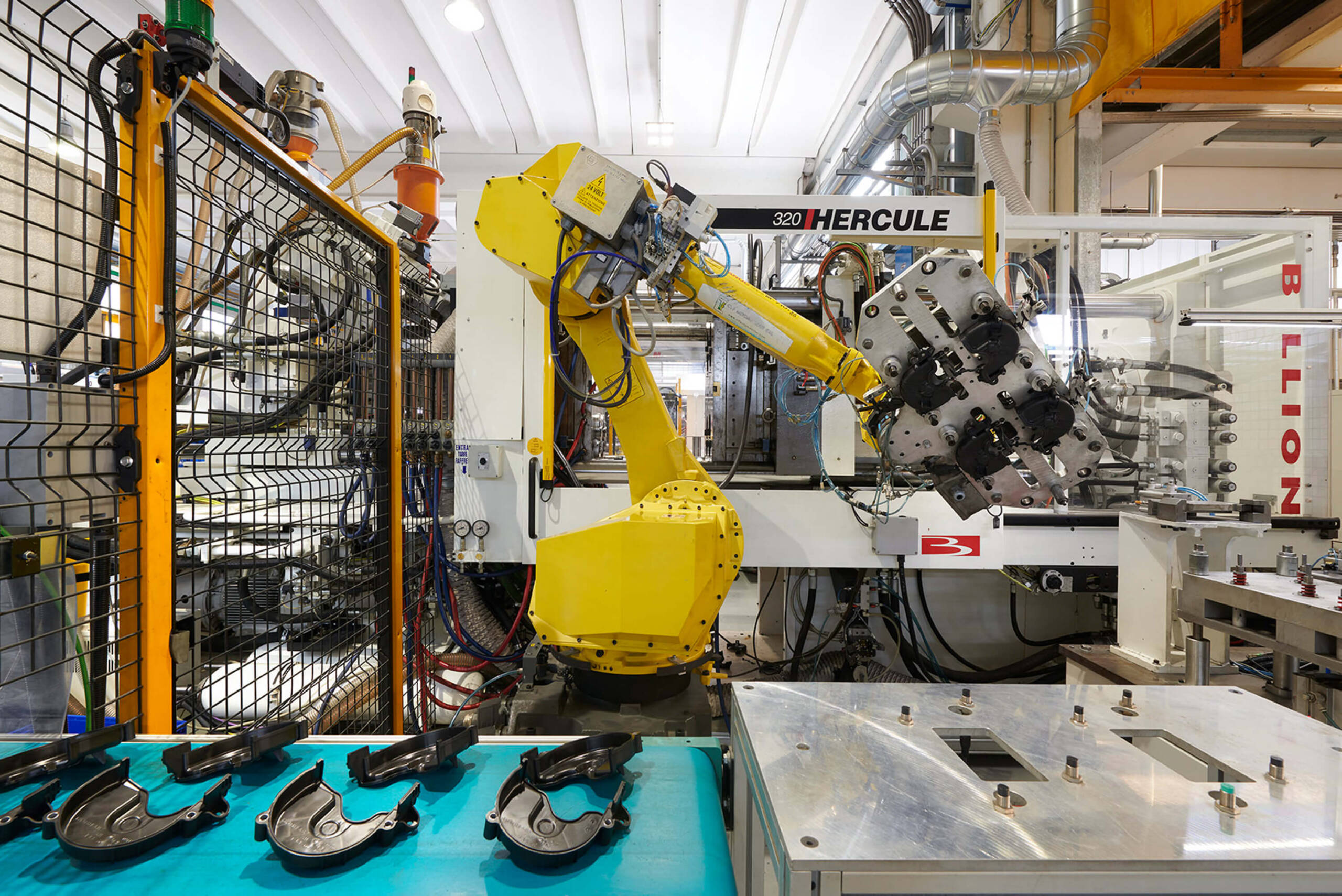
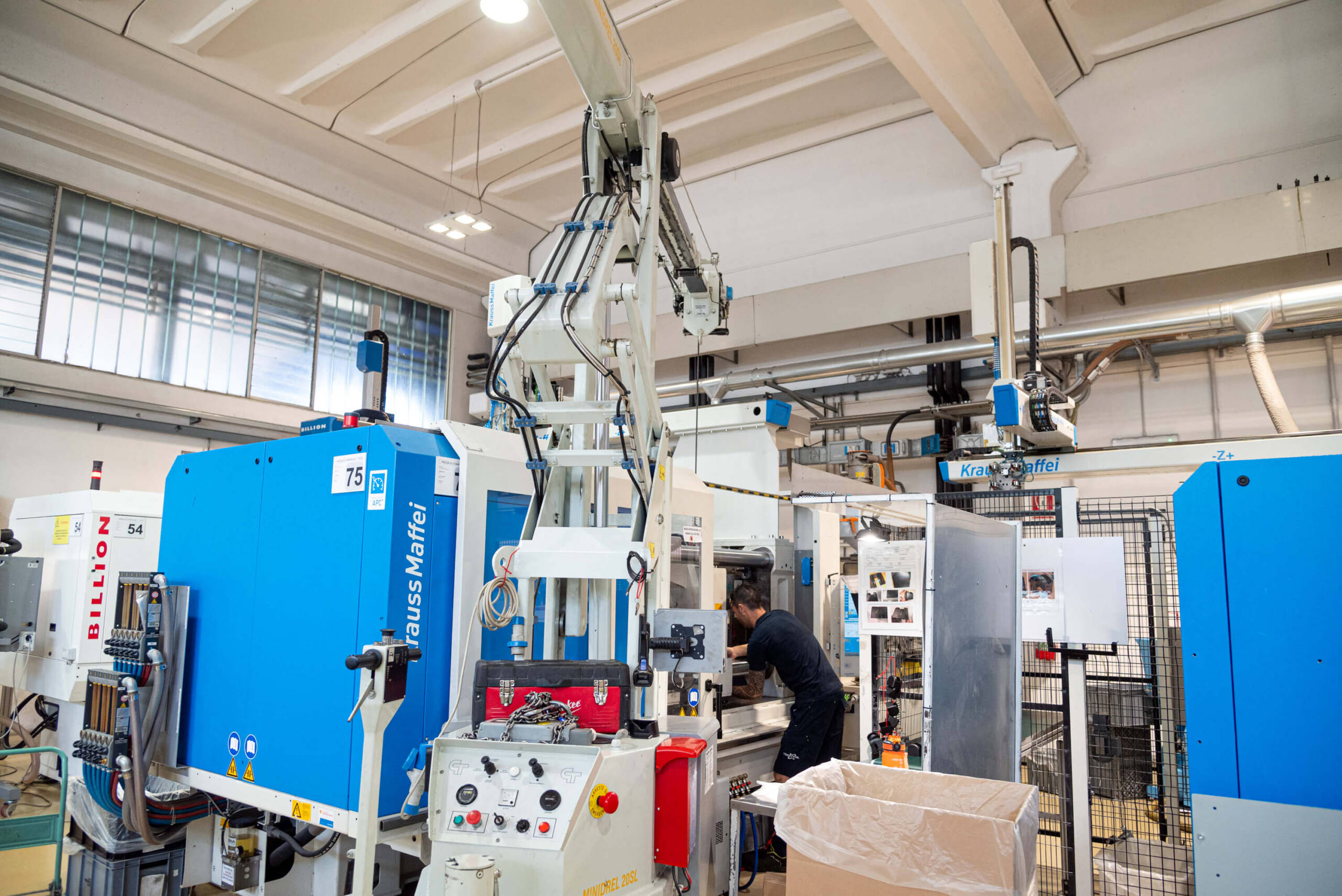
From 45 to 1,400 tonnes, the molding department operates as a precision ecosystem where press power meets process control. The processing of engineering plastics is managed through an integrated approach: the goal is not simply to produce parts, but to manufacture components ready for demanding industrial applications and global markets.
Injection Molding
Traditional thermoplastic injection molding relies on state-of-the-art presses, including Full Electric units for maximum precision and energy efficiency. Strict control of thermal and pressure parameters ensures consistent dimensional tolerances and optimized production cycles, from small batches to high-volume production. The result is stable and repeatable production, capable of delivering compliant components even to the most demanding specifications.
Two-Component Injection Molding (2K)
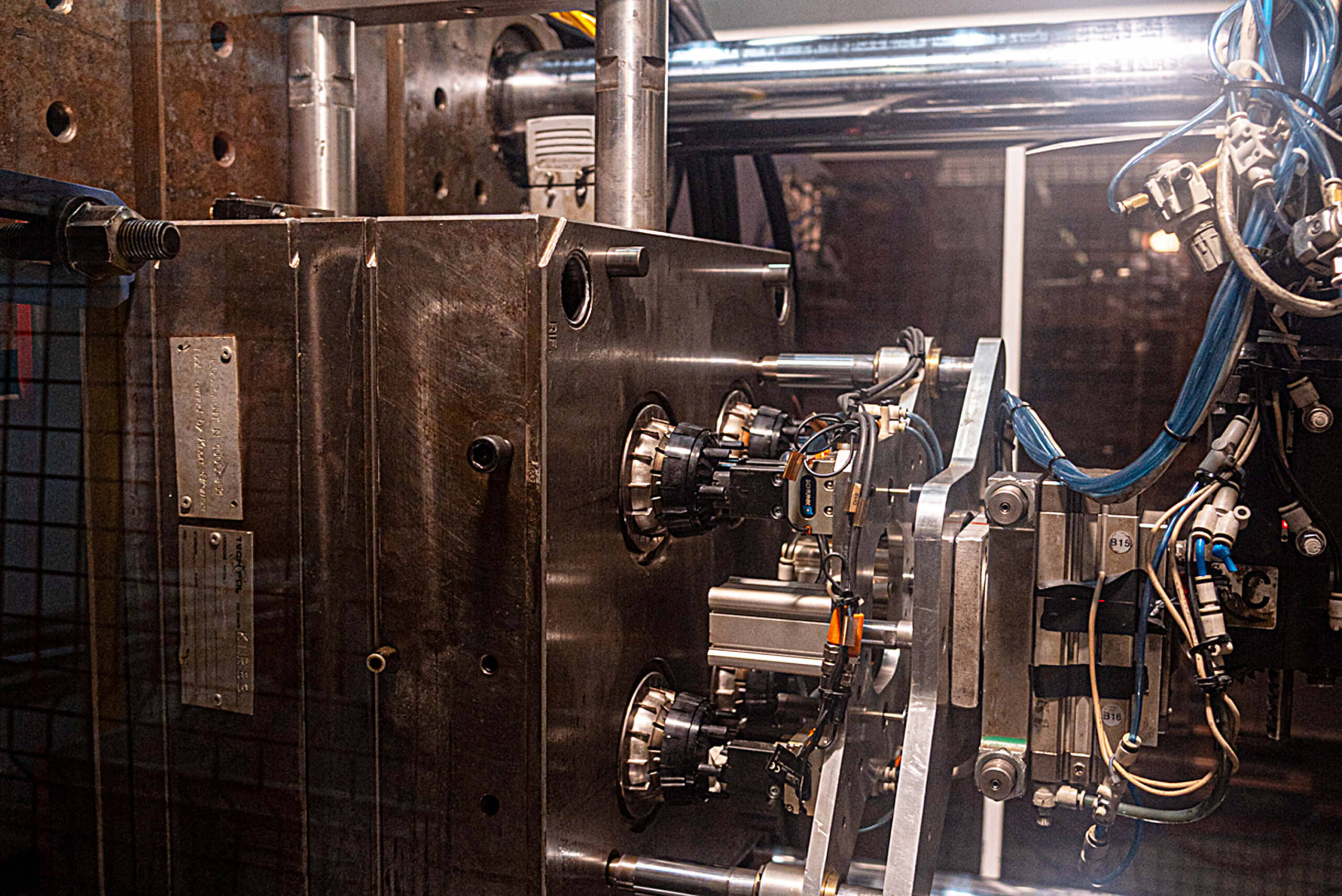
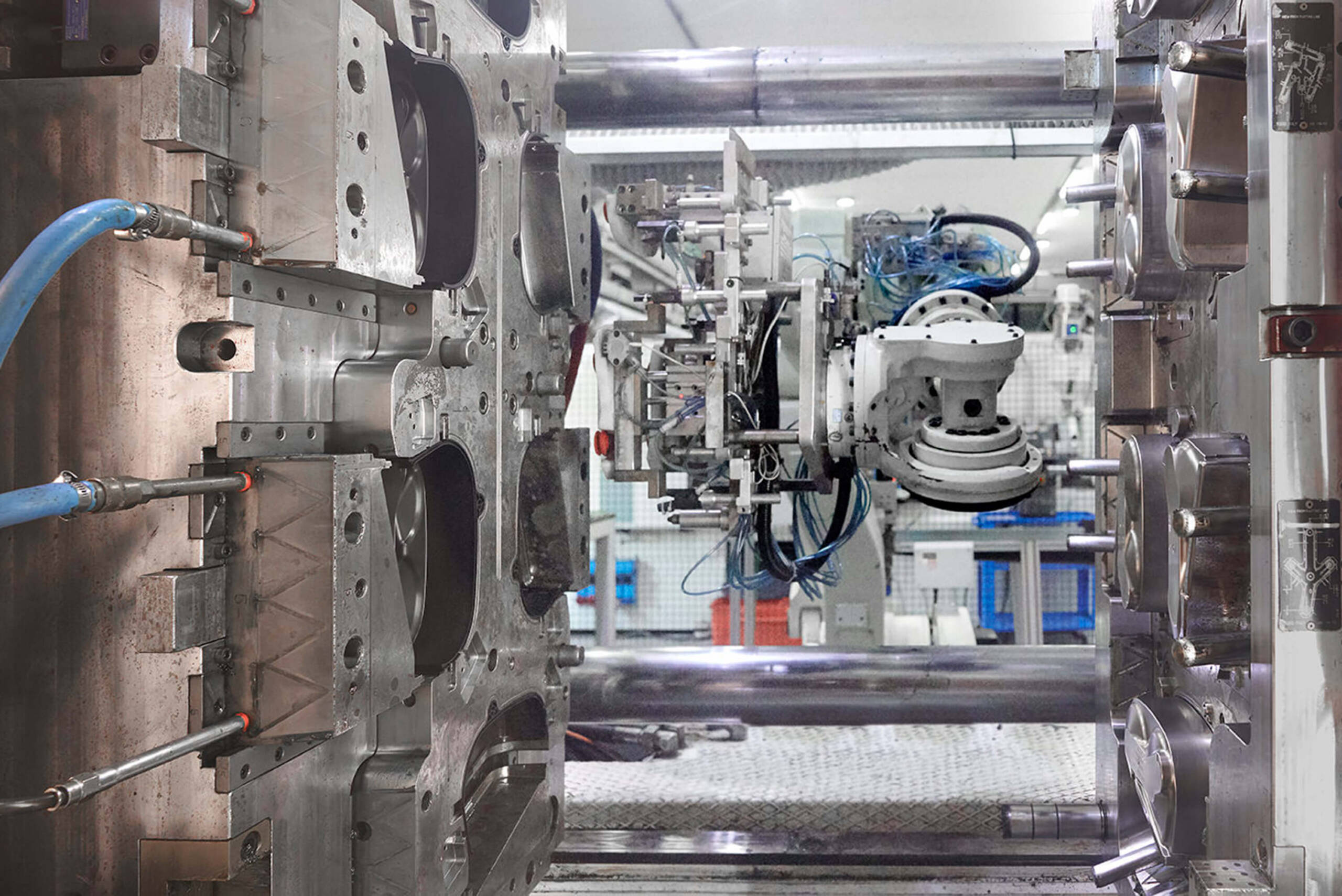
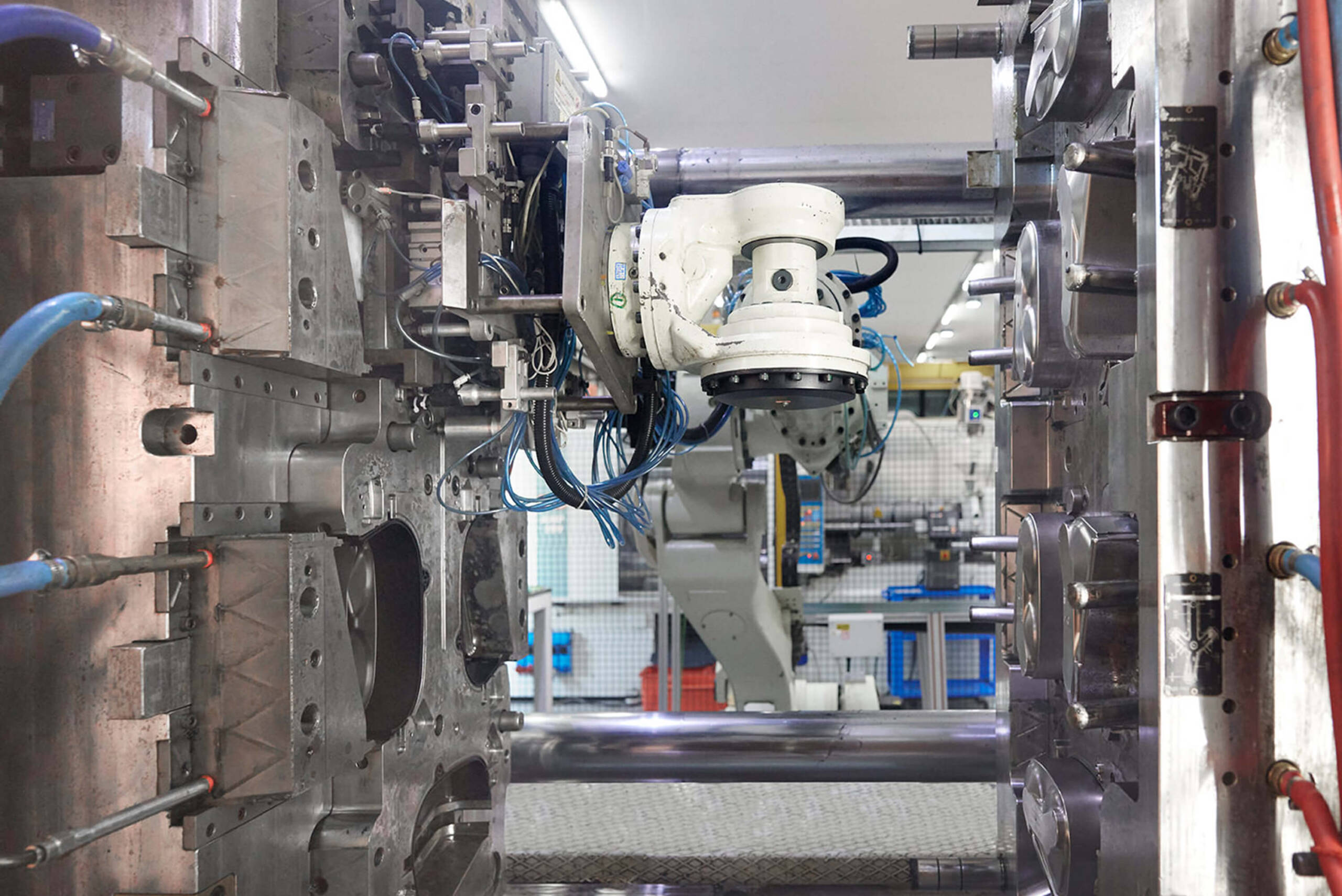
The use of presses with a dual injection system makes it possible to mold different materials within the same production cycle. The mold, designed as an integral part of the process, uses rotary table or index plate transfer systems (verify animated GIFs) to handle complex geometries without intermediate steps.
This makes it possible to integrate multiple functions into a single component, reducing subsequent processing and assembly times.
Special Technologies for Advanced Components
Alongside traditional injection molding, Techpol integrates advanced processes that make it possible to combine materials, reduce subsequent processing and achieve lighter, more functional components ready for assembly.
TPE Applications: Integration of Rigid and Flexible Materials
The combination of a structural polymer with a thermoplastic elastomer (TPE) makes it possible to integrate sealing functions or soft-touch surfaces into the same component. Unlike rubber compounds, molded TPE seals do not require post-processing such as trimming or curing and do not present storage aging issues.
This expands design freedom and makes it possible to integrate different functions into a single molding cycle.
PIT Technologies and Gas-Assisted Injection Molding (GAIM)
The projectile injection technology (PIT), used for curved ducts, and gas-assisted injection molding (GAIM) make it possible to produce hollow geometries while reducing the internal wall thickness of the component.
These solutions eliminate aesthetic defects such as sink marks on thick sections and ensure uniform external surfaces, while also reducing weight and material consumption.
Overmolding and Insert Integration
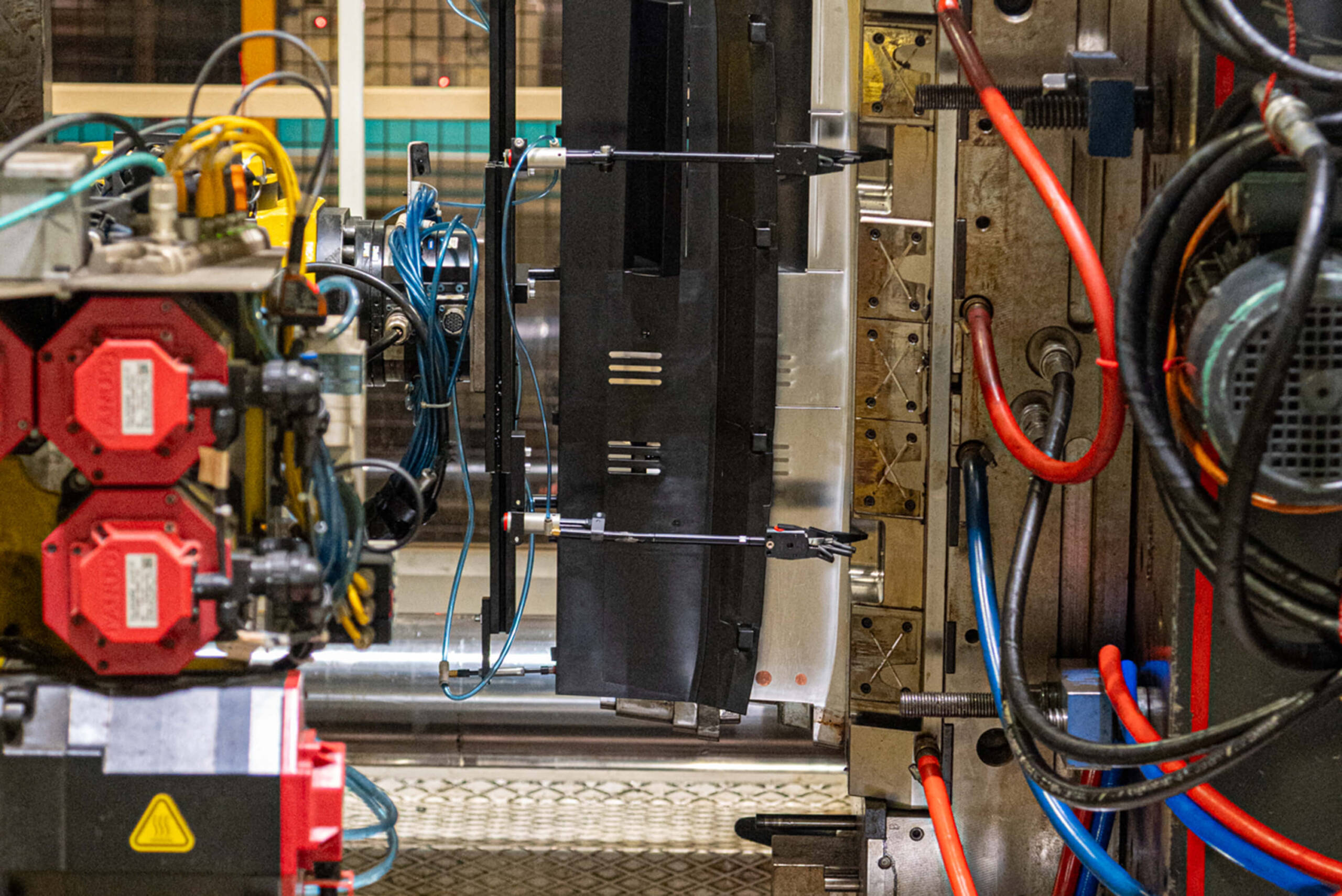
The overmolding of metal inserts, bushings, filter media, etc. makes it possible to integrate different materials into the same part. Monitoring the loading and positioning stages ensures insert alignment and the mechanical integrity of the joint between materials. This makes it possible to obtain finished components ready for assembly, reducing subsequent processing and simplifying the product structure.
What does this mean for the customer
Press range from 45 to 1,100 tonnes for different types of components
Stable and repeatable molding processes
Integration of functions through 2K and TPE technologies
Reduced weight and material consumption through PIT and GAIM technologies
Complete components thanks to overmolding and insert integration