

Molecular bonding for high-performance structures.
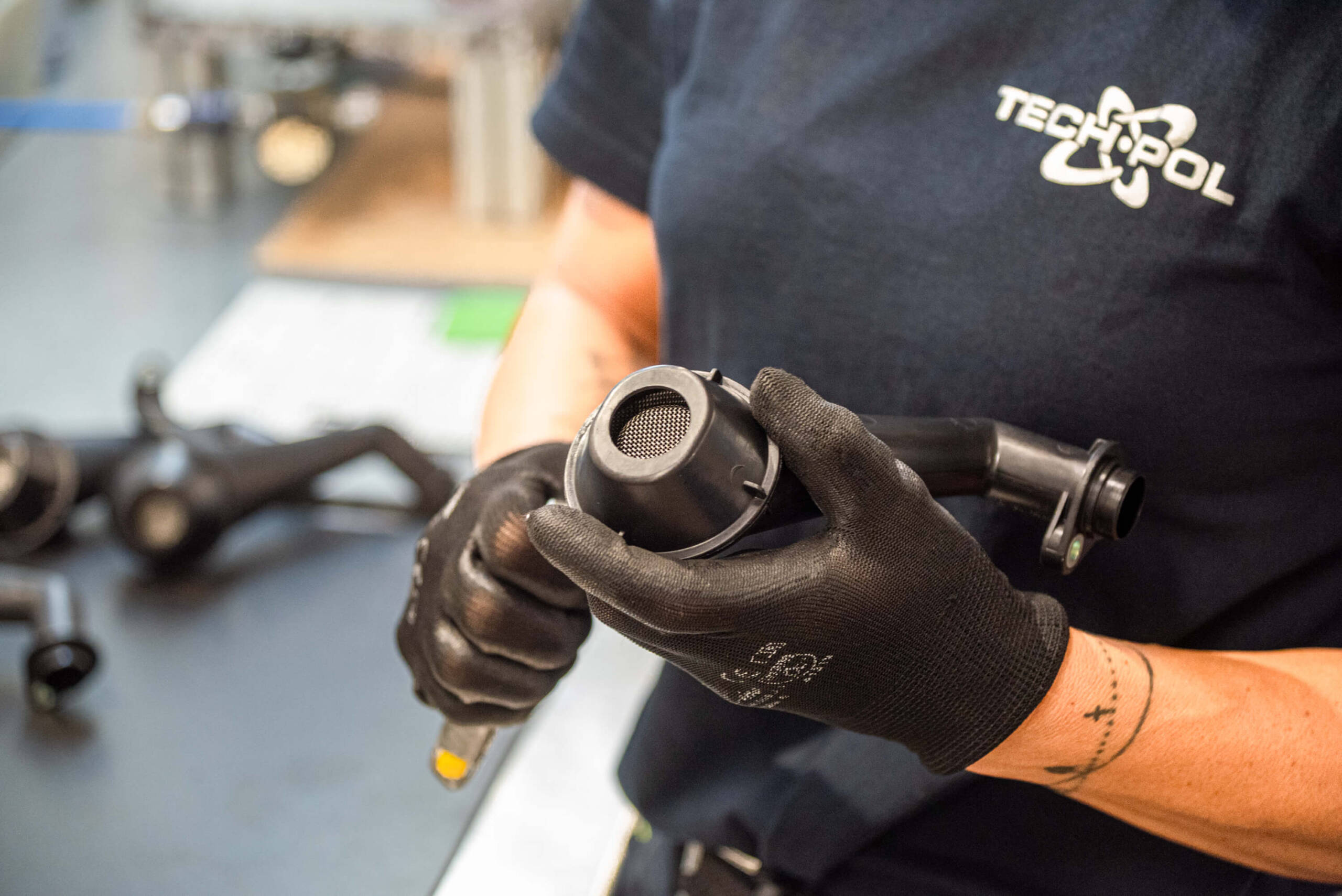
Plastic welding makes it possible to manufacture complex components, often designed to replace metal parts. This stage enables the engineering of structures that cannot be achieved through injection molding alone, providing design freedom and high technical performance through the permanent joining of multiple elements.
Infrared Welding
It is the technology of choice when the project requires high aesthetic and functional cleanliness. As a contactless process, the heat source brings the surfaces to the molten state without physically touching them, eliminating the risk of particle contamination.
The thermal radiation can be shaped to follow even complex geometries, making it possible to achieve precise and repeatable joints.
Vibration Welding (Linear and Orbital)
This technology is used when the component requires high mechanical strength or must operate under pressure. Vibration welding provides a highly robust structural joint. The linear version allows precise control of depth and pressure during the cycle, while the orbital variant is used for circular components with flat surfaces.
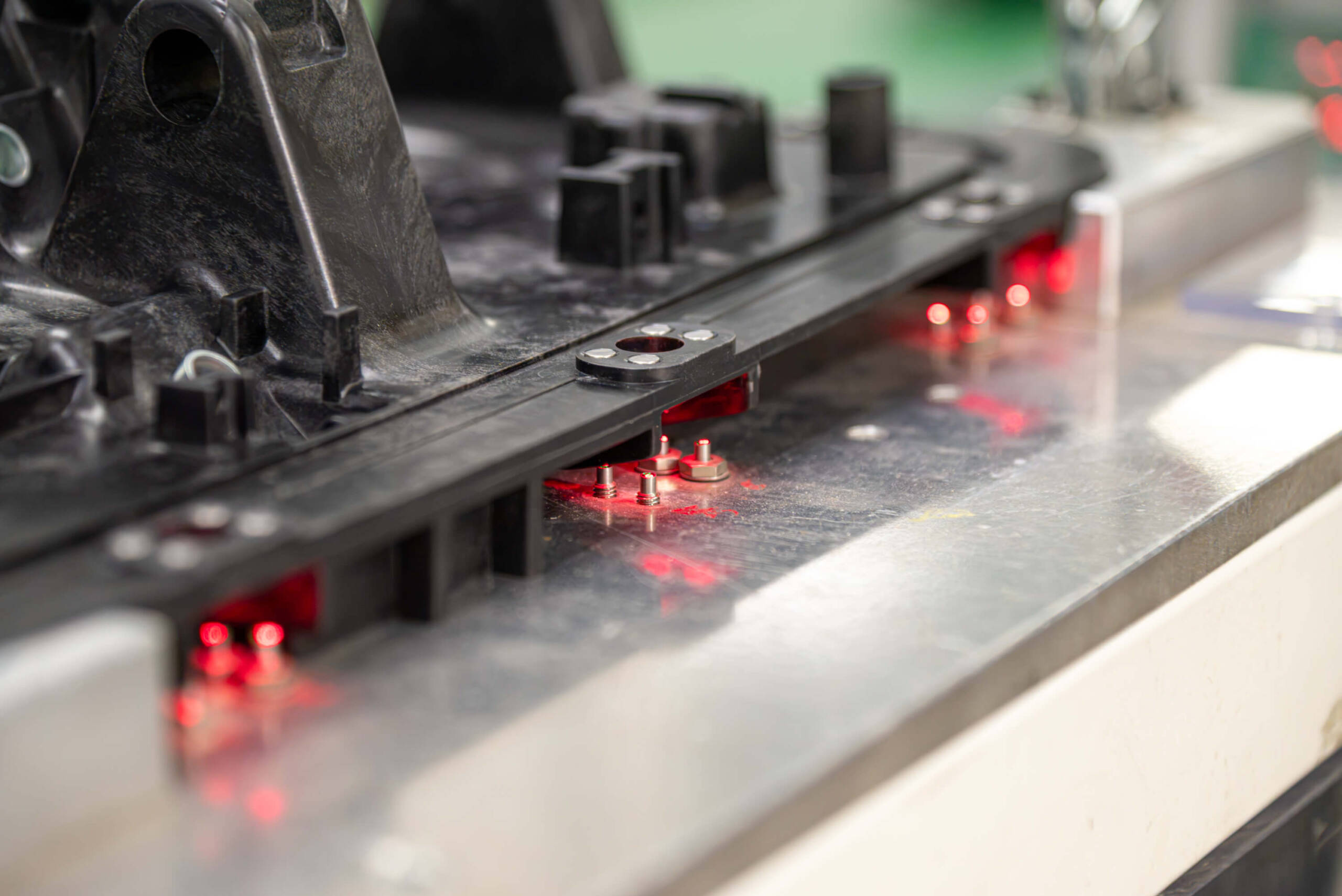
Fixture precision, consistent results
Each element is properly secured and controlled to ensure stable joints, even in high-volume production.
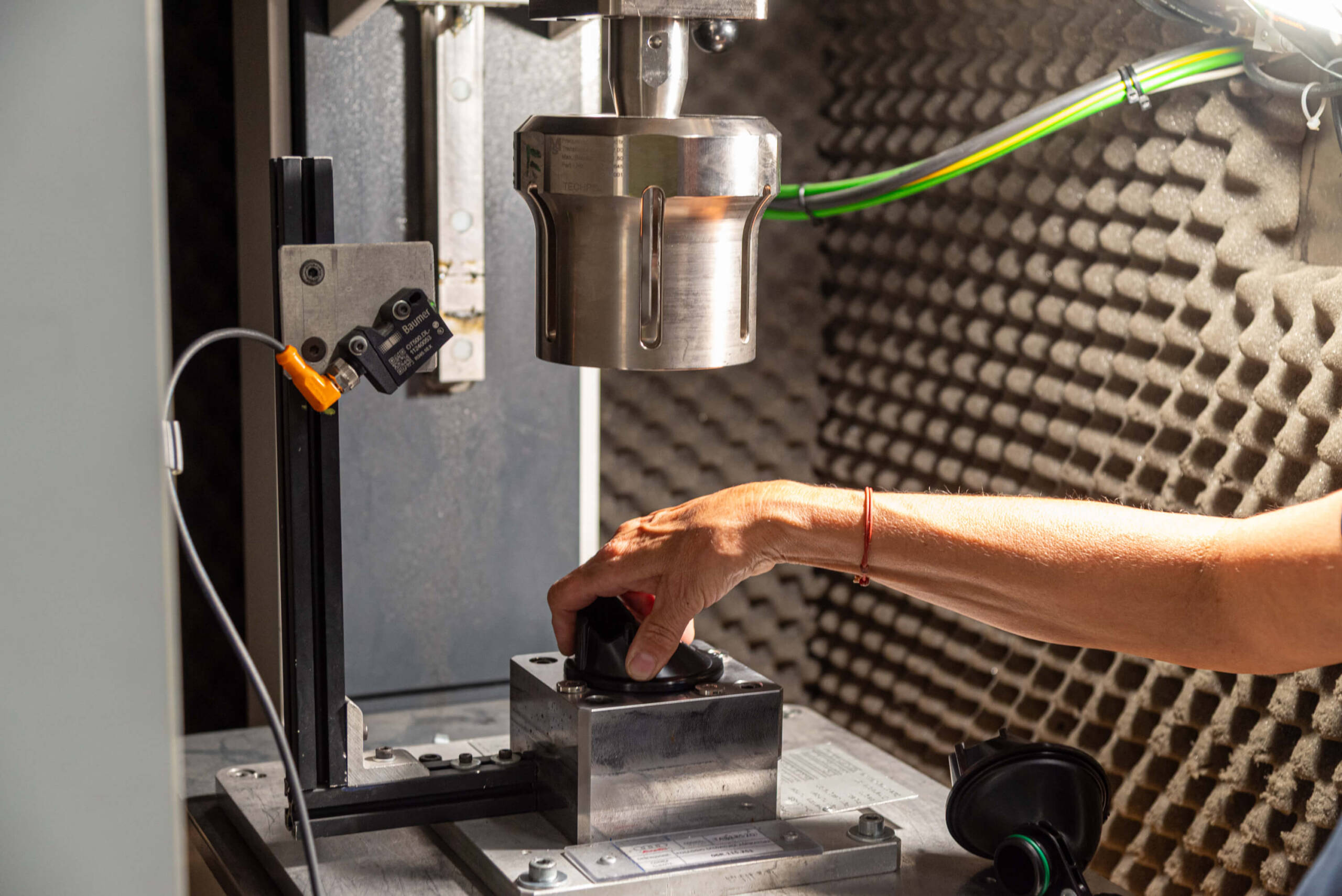
Ultrasonic Welding
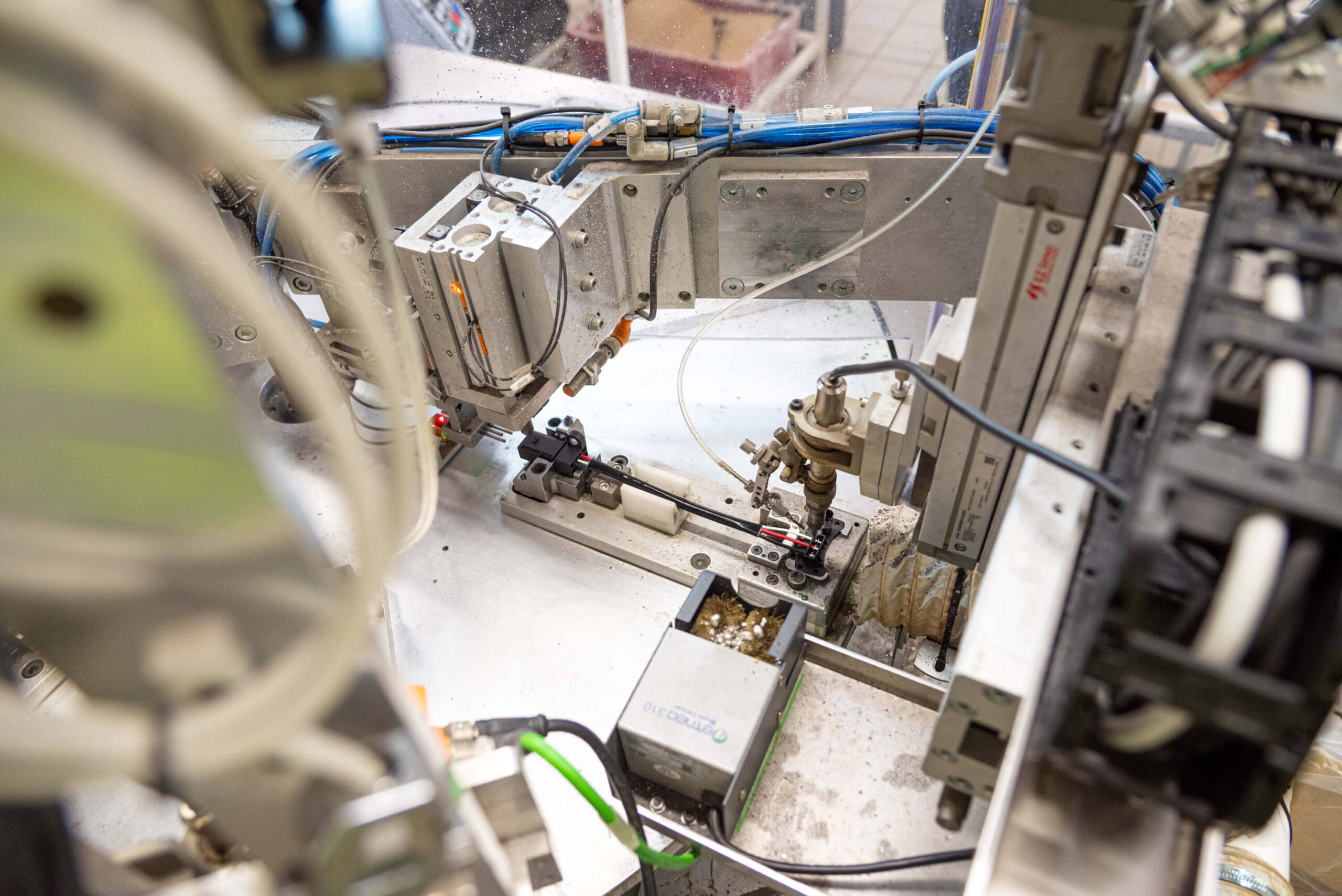
Ultrasonic welding is characterized by extremely fast cycles, generally between one and two seconds. It is particularly suitable for fastening aesthetic covers or integrating metal inserts. Integration with robotic systems makes it possible to reach complex areas and fully automate the process.
Hot Plate Welding
Hot plate welding is a well-established technology that uses direct contact to bring the materials to the molten state. It remains a particularly effective solution when the project requires deep and uniform fusion. It is often used for large components or applications requiring high mechanical tightness.
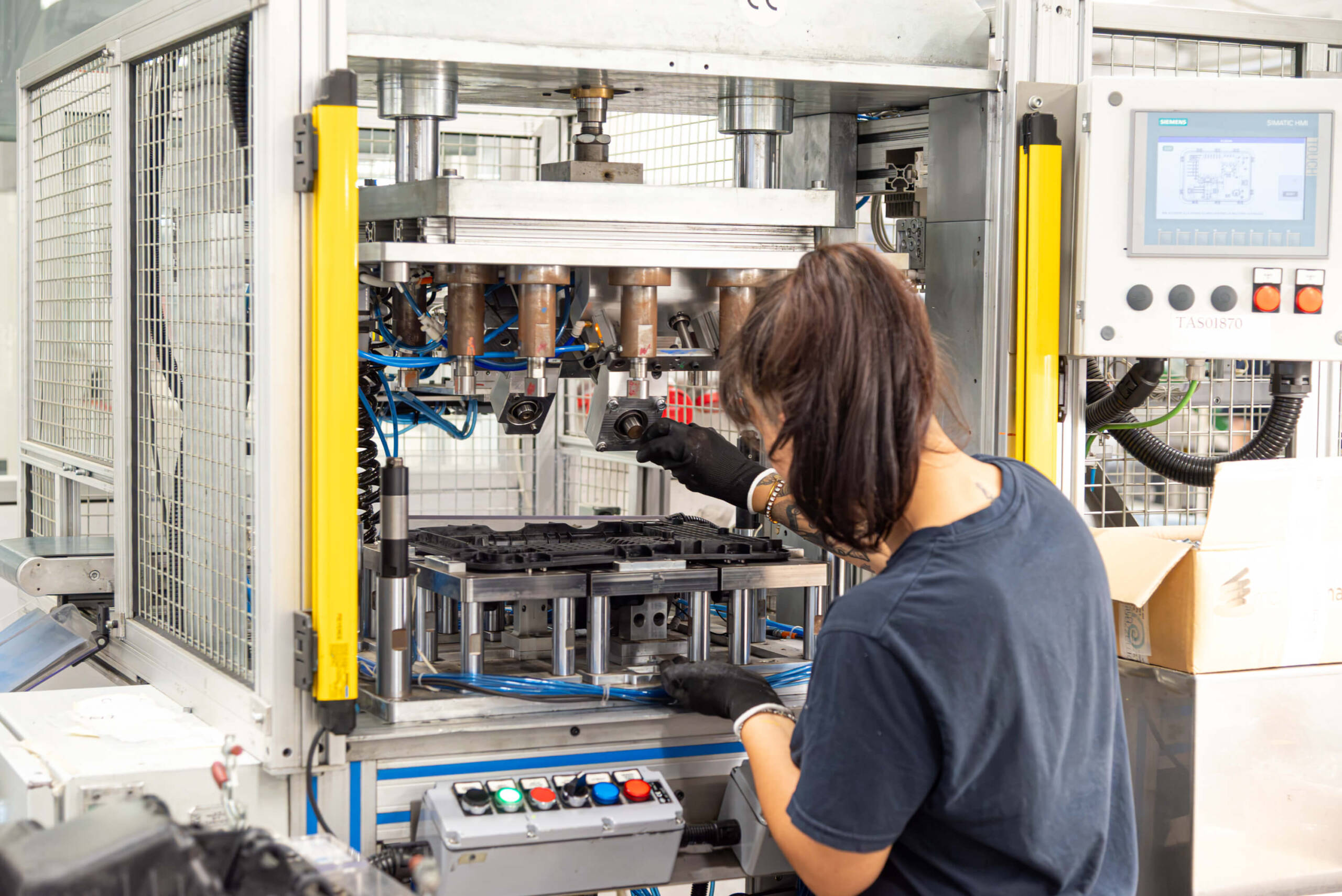
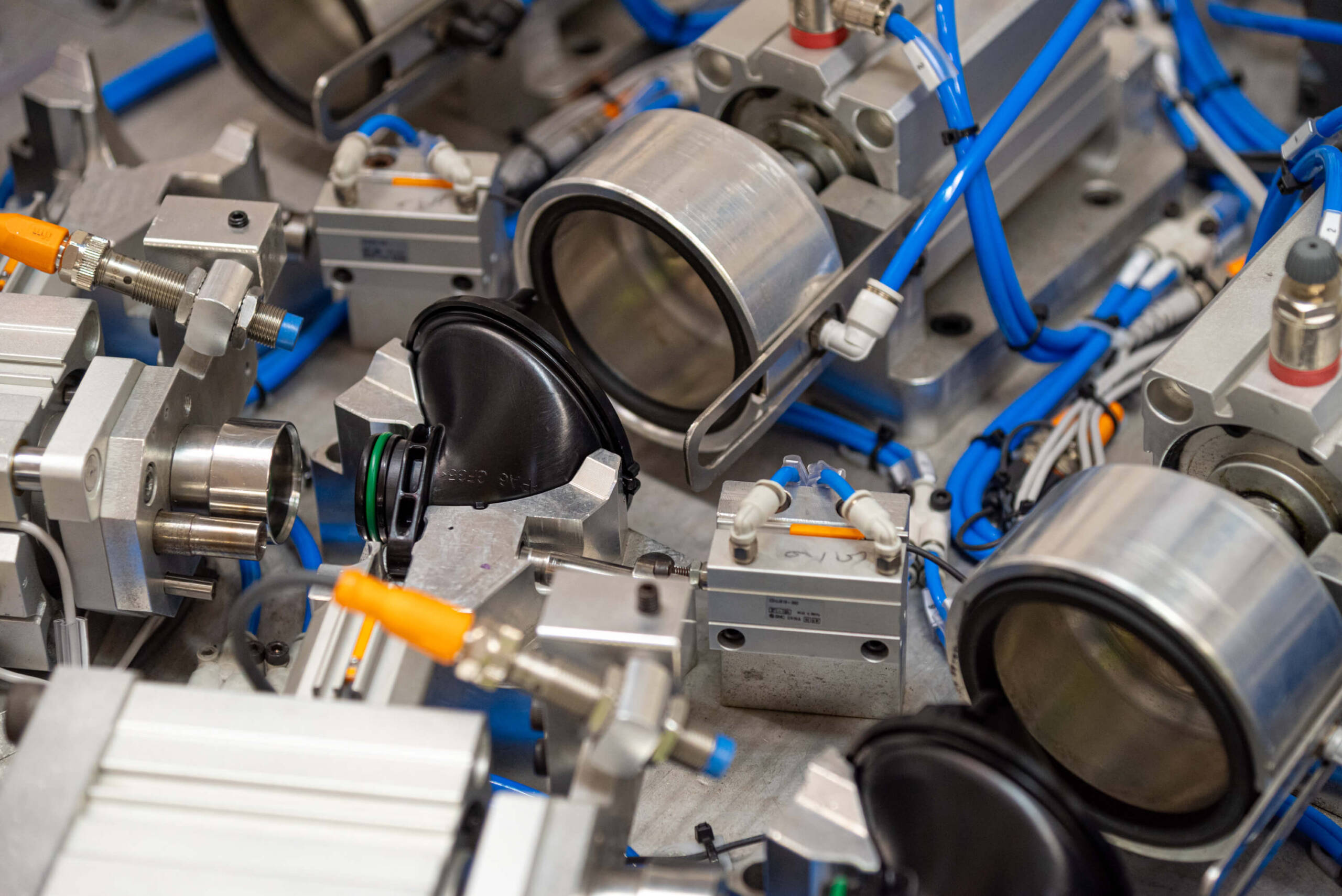
Welding equipment designed for the component
Welding is not an isolated step, but an integral part of the component design. Welding fixtures and workholding equipment are designed and manufactured in-house to manage tolerances and ensure the correct positioning of the parts during the process. This approach makes it possible to achieve stable and repeatable joints, even in high-volume production.
What does this mean for the customer
Possibility of producing complex components that cannot be achieved through injection molding alone
Different welding technologies selected according to the application
Automated and repeatable processes even for high-volume production
Integration between component design and welding equipment
Stable and reliable structural joints over time