

From idea to production, with no surprises.
The development phase determines process stability, component quality, and the economic sustainability of the project. At Techpol, technical analysis begins from the earliest stages, with the goal of turning an idea into a component that can be effectively industrialized.
Co-design and CAD system compatibility
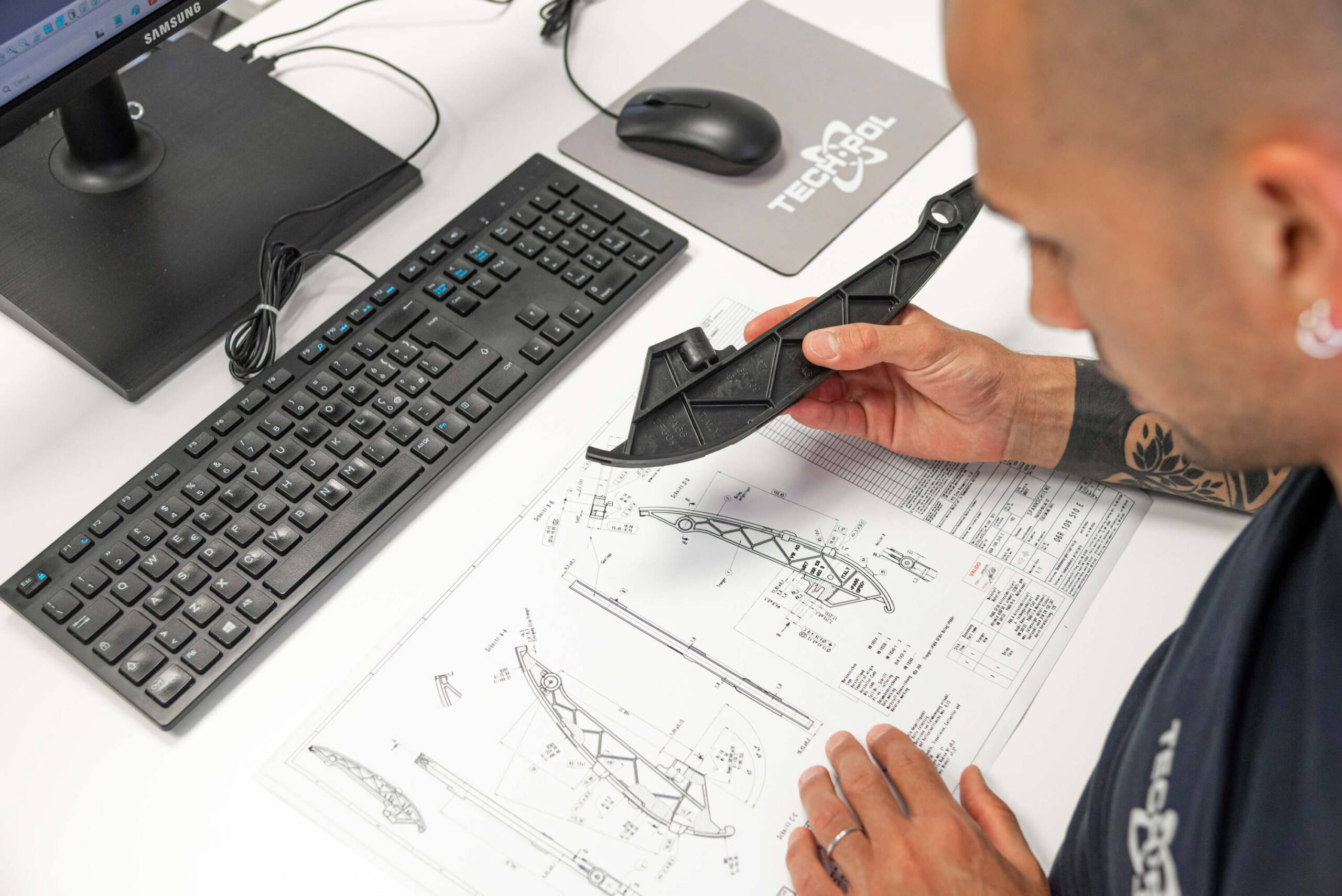
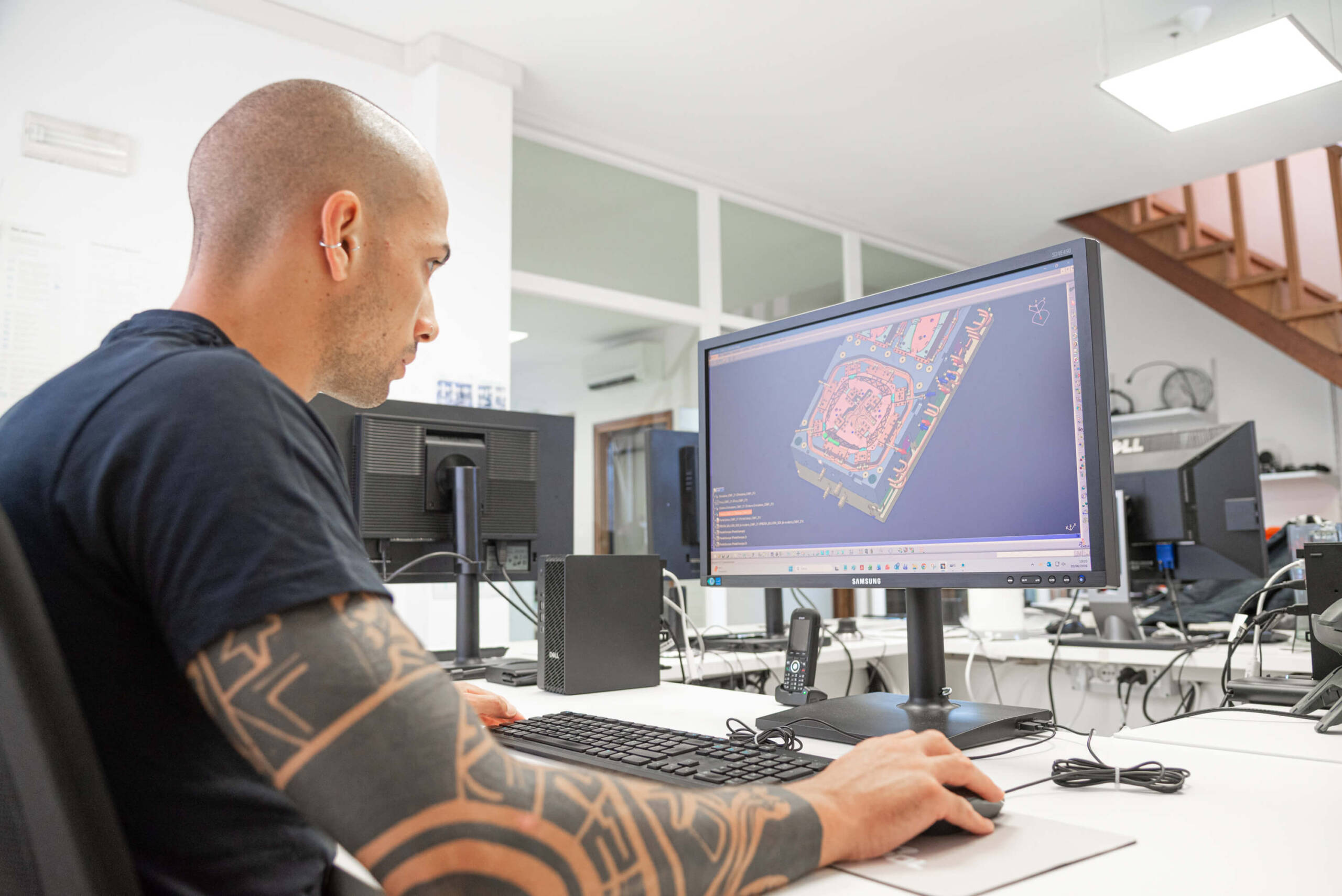
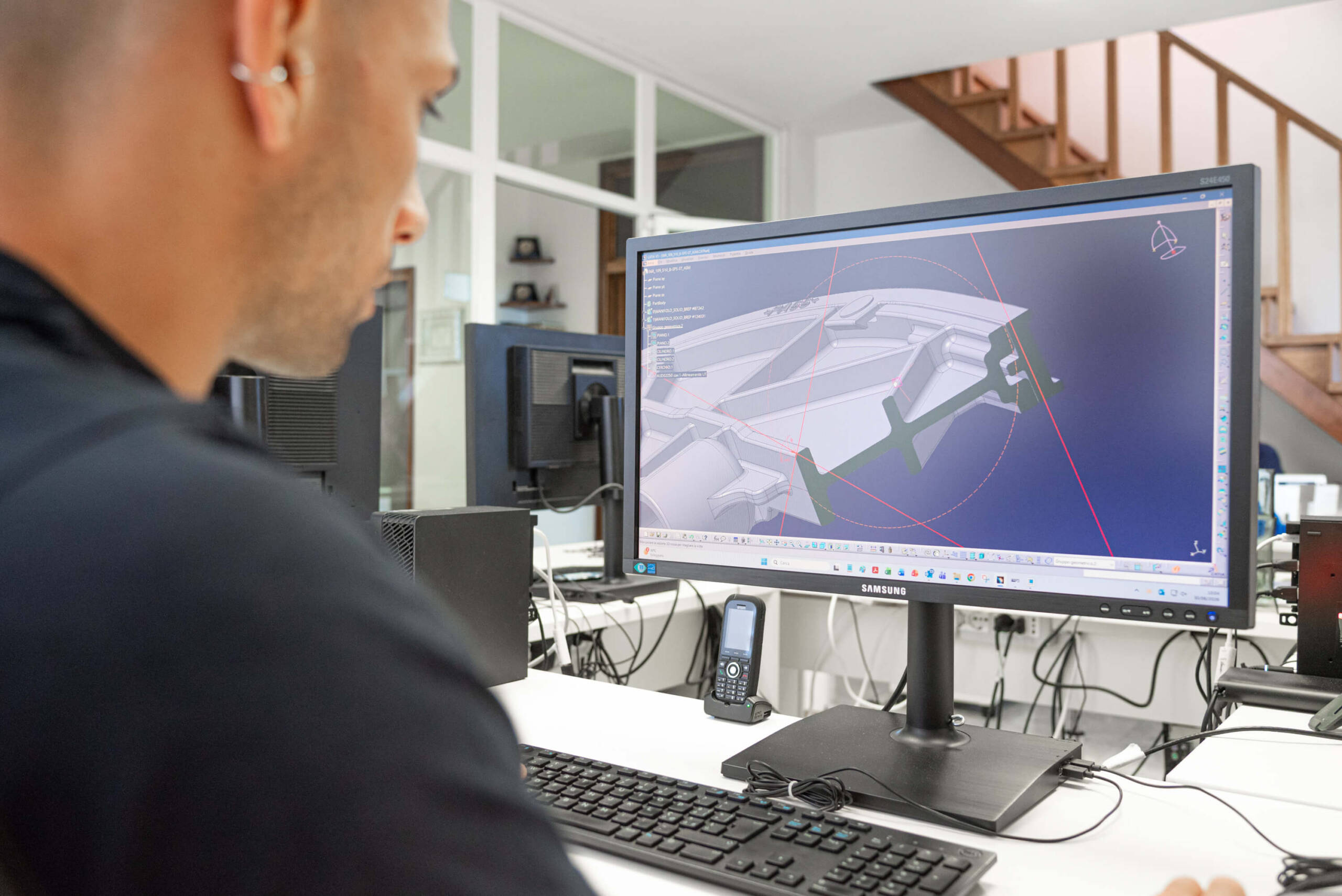
The co-design work with the customer makes it possible to optimize geometries, materials and construction solutions before the molds are produced. The models are managed using the same design environments adopted by major industrial customers — CATIA, PTC Creo and Rhino 3D — ensuring continuity throughout the development process and full data compatibility.
Early Design Risk Assessment
During the design phase, risk analysis methodologies such as FMEA are applied to identify and address potential issues before the tooling is built and production begins.
Simulation, testing and special processes
Before production begins, Techpol verifies the technical choices, validates the most complex processes, and defines the technologies required to achieve stable, safe and repeatable components.
Simulation of molding processes
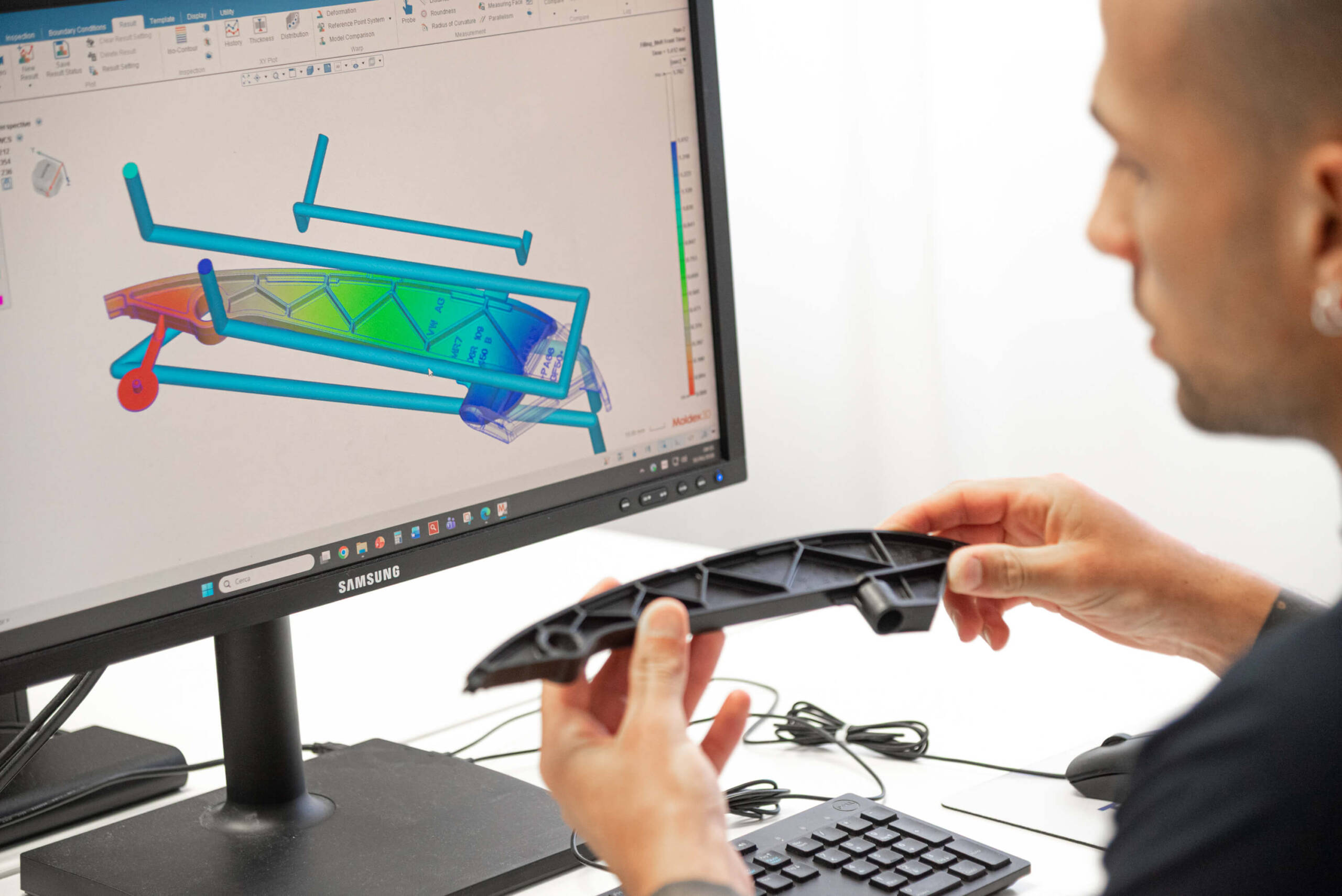
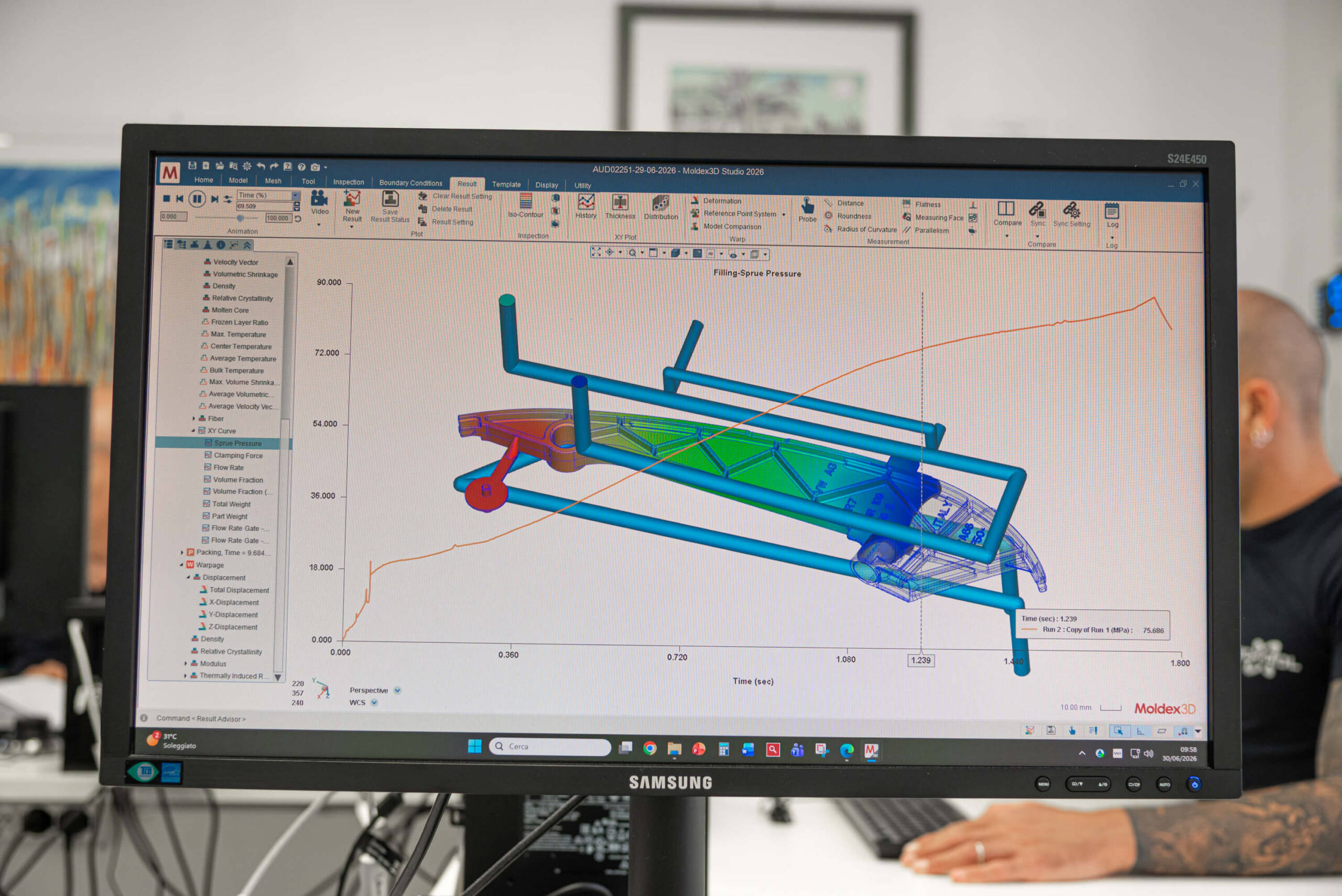
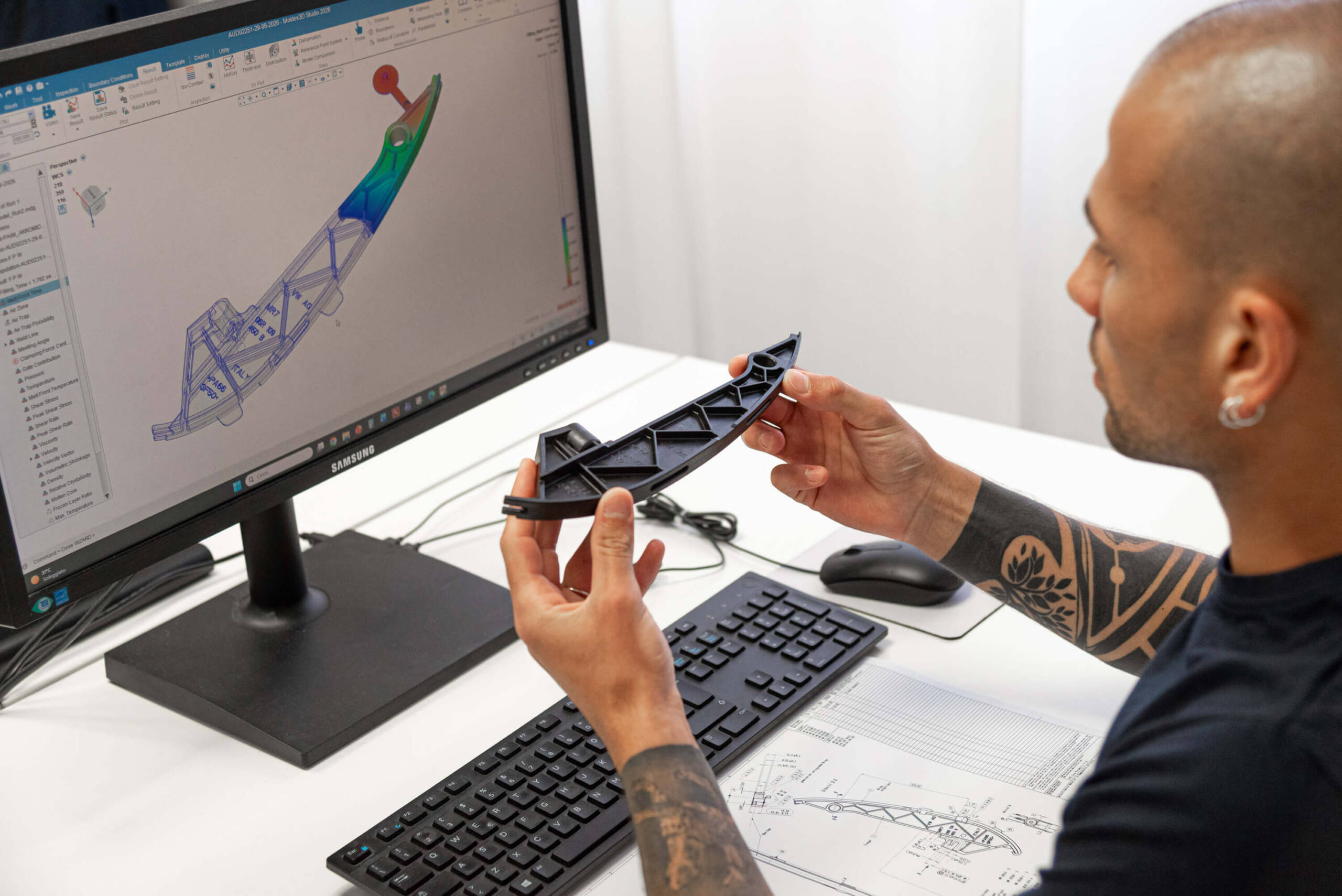
The simulation of molding processes is a fundamental step. Using CAE tools such as Moldex3D, it is possible to analyze material behavior, flow patterns and pressures inside the mold. This makes it possible to validate the process before actual production, avoiding corrective interventions once the mold has already been manufactured.
Prototypes and validation of complex processes
The development phase also includes the production of functional prototypes and the validation of the most complex processes. Techpol manages technologies such as two-component molding, overmolding and the integration of metal inserts, activities that require specific expertise in mold design and thermoplastic processing.
Welding technologies defined during the design phase
When the component requires joining operations, the most suitable technology is defined during the design phase. Vibration, ultrasonic, hot plate or infrared welding are selected according to the final operating loads. Testing and inspection systems are developed in-house to verify the component’s strength, tightness and stability.
What does this mean for the customer
Component development focused on series production
Technical co-design using the same CAD standards adopted by customers
Preventive process analysis through CAE simulation
Validation of complex processes and joining technologies
Reduction of technical risks before mold construction