In a rapidly evolving world, where global competition demands speed, quality, and sustainability, Techpol’s IT infrastructure is far more than a technological support system. It is the backbone that connects all company processes—from production planning to strategic analysis—turning our manufacturing facilities into a connected and intelligent organism.
This infrastructure was not built overnight. It has been developed over time, starting from a fundamental core: our corporate ERP system, implemented in 2012 and continuously evolved to become the backbone of digitalization within the plant.
ERP as the Core of Digital Transformation
A well-implemented ERP system is not just an accounting database or a logistics tool. It is the central hub that integrates production, warehouse management, supply chain, sales, and quality control data, enabling decision-makers to gain a single, real-time, and accurate view of what is happening across the company.
This is one of the key advantages of ERP systems within the context of smart factories and Industry 4.0: they act as a pivot for collecting and processing data from heterogeneous systems, reducing errors, duplication, and inefficiencies.
Industry 4.0: Connectivity, Automation, and Smart Manufacturing
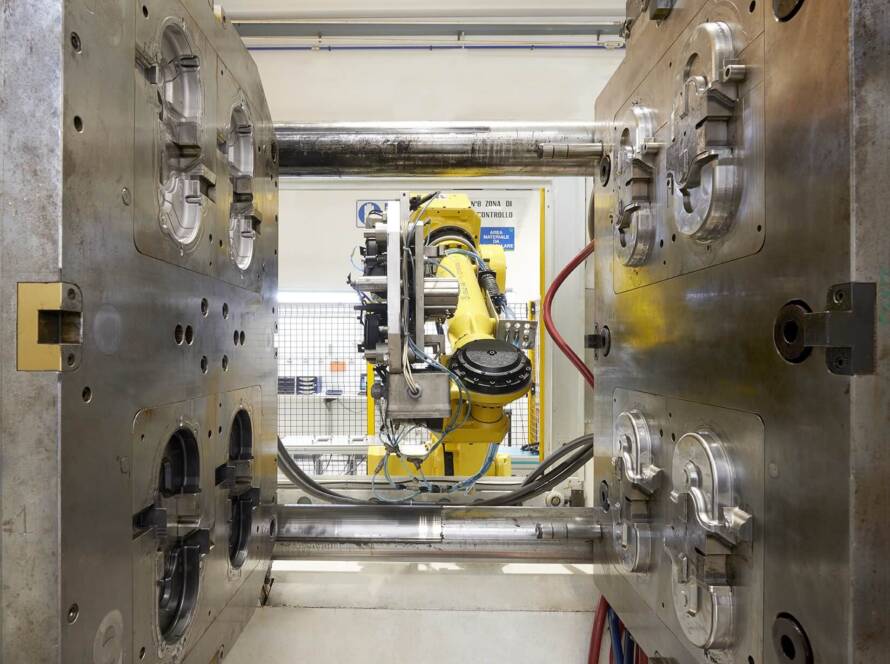
Techpol has integrated a significant portion of its machinery fleet with Industry 4.0 technologies, transforming production into a connected environment. Machinery modernization and real-time data collection are core characteristics of a smart factory—an industrial setting where sensors, PLCs, robots, and management systems continuously communicate to improve efficiency, quality, and flexibility.
This connectivity enables the company to:
- monitor production parameters in real time,
- quickly identify operational issues,
- implement predictive maintenance strategies,
- synchronize production lines with logistics and market demand.
OEE and Real-Time Dashboards: Data-Driven Decisions
One of the most tangible applications of this transformation is the monitoring of OEE (Overall Equipment Effectiveness). Through internally developed proprietary dashboards, teams can visualize machine and process performance in real time, identify bottlenecks, and intervene before issues lead to downtime or scrap.
The ability to access instant, actionable data is a cornerstone of digital manufacturing and effective quality management.
Internal Digitalization: Numbers That Speak for Themselves
Our digital infrastructure extends well beyond machine control. Overall:
- 20 internal processes have been fully digitalized,
- more than 40,000 sheets of paper per year have been eliminated, reducing administrative workload and improving operational sustainability.
These results translate into shorter cycle times, fewer manual errors, and faster information flow between departments, with tangible impacts on competitiveness. Real-time data and digital workflows also help reduce operational costs and improve internal traceability.
Tools Designed for Everyday Use: Apps, Portals, and Vertical Access
Effective digitalization is not just about powerful systems—it requires tools that are truly useful for the people working daily on the shop floor and in offices. For this reason, Techpol has integrated:
- dedicated applications for internal training,
- real-time digital product sheets,
- an advanced testing and inspection portal.
These tools allow operators to interact with data quickly and intuitively, making technology an enabler rather than a barrier.
The Result: A System That Embraces the Entire Company
Digital transformation at Techpol does not stop at data collection. Data is actively used to improve every process—from production and logistics to quality control and customer management.
An evolved and integrated ERP infrastructure, combined with intelligent technologies and monitoring dashboards, enables decisions based on real, updated, and consistent information. This not only makes production more efficient and reliable but also positions the company to face the future challenges of advanced manufacturing with agility.
Looking Ahead with a Solid Digital Foundation
In a landscape where companies adopting advanced digital strategies gain significant competitive advantages, Techpol has chosen to invest early in an infrastructure that combines technological robustness with ease of use.
Technology is not an end in itself—it serves to make the benefits of digital transformation tangible, from process traceability to faster market response, from operational sustainability to long-term organizational growth.